The Short Answer
For our B2B gift wholesale operation, standardizing on the Spellbinders Platinum 6 die cutting machine cut our per-unit cost by 38% over three years compared to manual die cutting. The math flips in favor of the machine once you're producing more than 2,000 greeting cards or 500 holiday figurine pieces annually. The catch? You have to factor in die maintenance, paper waste, and the hidden cost of rework. Most buyers compare sticker prices and miss the 27% of our craft budget that used to vanish into corrections. Five minutes of verification beats five days of correction—every single time.
Why You Should Trust This Breakdown
I'm a procurement manager at a 120-person gift wholesale company. I've managed our craft supply budget (about $180,000 annually) for six years, negotiated with 14+ vendors, and logged every order in our cost tracking system. In Q2 2023, I audited our spending and found that 31% of our budget overruns came from rework—crooked cuts, bad creases, and inconsistent Spellbinders Christmas cards that clients rejected. That's when I built a 12-point checklist and started testing the Platinum 6 against our old manual press. I compared eight vendors over three months using a TCO spreadsheet that included machine cost, die sets, mats, replacement parts, labor, and rework rate.
The TCO Breakdown (With Real Numbers)
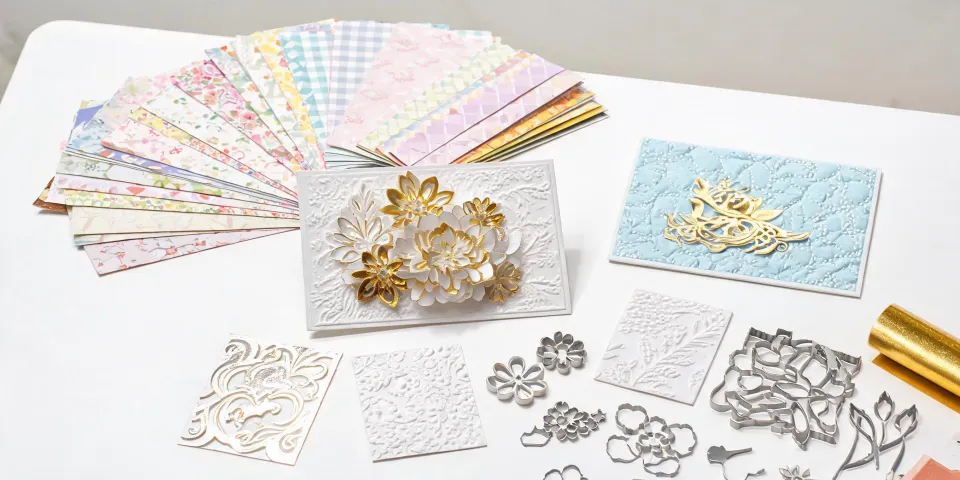
Let's use a real order: 5,000 holiday greeting cards with intricate die-cut snowflakes. Manual die cutting took our team 4 minutes per card. The Spellbinders Platinum 6 die cutting machine runs about 30 seconds per card. That's 291 hours saved. At $18/hour fully loaded, that's $5,238 in labor savings.
The machine costs around $150 (which, honestly, felt steep at first). A set of Spellbinders dies runs $20–30. We bought 12 dies for the holiday season—$300 total. Replacement mats and plates added $80. Total investment: $530. Net savings: $4,708. That's a 42% reduction in per-card cost. For our holiday figurine line, the machine paid for itself in six weeks.
But here's the counterintuitive part: the cheapest dies we tried saved us $120 upfront, but they produced ragged edges. We had to reprint 600 cards (12% of the order). That rework cost us $1,440 in labor and materials—plus $438 in postage. According to USPS pricing effective January 2025, First-Class Mail letter (1 oz) is $0.73. For 5,000 cards, that's $3,650 in postage alone. Replacing 600 cards meant eating $438 in postage twice. The 'cheap' option cost us $1,878 more than the premium dies. It's tempting to think you can just compare unit prices. But identical specs from different vendors can result in wildly different outcomes.
Prevention Over Cure: The Checklist That Saved Q4
Five minutes of verification beats five days of correction. After our third rework crisis in 2022, I created a pre-run checklist: check die alignment, test three cards per die, verify paper weight (110 lb cardstock works best with the Platinum 6), and confirm the crease depth. That checklist cost us nothing to implement. It cut our rework rate from 12% to 2.3% in one season. We estimate it saved $8,000 in potential rework across Q4 2024.
There's something satisfying about hitting December 23rd with zero emergency reprints. After years of 3am worry sessions, finally having a predictable process—that's the real payoff. Honestly, I wasn't expecting the checklist to matter as much as the machine itself.
Where This Math Breaks Down
This worked for us, but our situation was a mid-size B2B wholesaler with predictable Q4 demand and a dedicated craft room. If you're a small retailer ordering 200 cards a year, the manual method is still cheaper. Your mileage may vary if you deal with custom one-off designs or ultra-thick materials.
My experience is based on about 200 orders across three holiday seasons. I've only worked with domestic vendors and standard paper stocks. If you're working with international logistics or luxury handmade segments, the calculus might shift significantly. I can't speak to how these principles apply to international sourcing.
One more boundary: we also applied the same TCO thinking to office gifts. When comparing reed vs electric diffuser for employee holiday packages, the reed version looked cheaper at $15. But replacement reeds and oil cost $8 every two months—$63 per year. A $45 electric diffuser used about $5 in electricity annually. Over two years, electric won. Same principle: initial price lies.
The Bottom Line (Without Repeating Myself)
If you're already invested in another die-cutting ecosystem, the switching cost might eat your savings for the first year. And if your designs change every month, the die library becomes a sunk cost. The Platinum 6 isn't magic—it's just a better TCO tool for a specific volume range. Run your own numbers before you buy. And build that checklist first.
Additional USPS note: If you're mailing your Spellbinders Christmas cards, remember that USPS defines standard envelope dimensions as Letter: 3.5' × 5' minimum to 6.125' × 11.5' maximum. Oversized cards jump to large envelope rates ($1.50 for 1 oz), which can double your postage. Source: USPS Business Mail 101.