-
Stop Comparing Cutting Machines by Sticker Price
-
Why the Machine Price Is Only About 30% of What You'll Actually Pay
-
The Die Ecosystem Matters More Than the Machine
-
The Quality-to-Perception Pipeline Is Real (and Measurable)
-
"But Isn't Spellbinders Primarily a Paper Craft Brand?"
-
Bottom Line: The Best Cutting Machine Is the One With the Lowest Total Cost
Stop Comparing Cutting Machines by Sticker Price
I'll say it plainly: if you're asking "which cutting machine is best for fabric" and your first move is to compare price tags, you're already setting yourself up for a bad procurement decision.
I know because I did exactly that.
I'm a procurement manager at a 45-person promotional products company. I've managed our craft and print materials budget — roughly $31,000 a year — for 6 years. That's about $187,000 in cumulative spending across 90+ vendors, all logged in our cost tracking system. Every invoice. Every credit memo. Every "I thought this was included" conversation.
Here's my position: for small-to-mid-volume fabric cutting in a commercial gift context, the Spellbinders Platinum die cutting machine delivers the lowest total cost of ownership — but not for the reasons the spec sheets tell you.
The reasons are less glamorous. And more important.
Why the Machine Price Is Only About 30% of What You'll Actually Pay
In early 2023, I ran a comparison across 4 vendors for an electric die cutting setup. Our use case: fabric embellishments for client holiday greeting card sets, plus some seasonal holiday figurine production.
The quotes ranged from $129 to $419 for the base machines.
The $129 option looked like the obvious win. Our CFO would've approved it in 30 seconds.
Then I built the 12-month TCO model. Not because I'm paranoid — because I got burned on hidden costs twice before and now I build a cost calculator for everything.
Here's what the spreadsheet showed for the budget machine:
- Replacement dies: $180–$400/year (depending on design variety)
- Cutting plates and shims (consumables): ~$60/year, minimum
- Specialty fabric dies: $25–$60 each, with inconsistent availability
- Rework due to failed cuts: approximately 8% of production
That 8% rework rate is where it gets ugly. Not dramatic. Just quiet, consistent loss.
We were averaging 200-unit runs for client orders. At an 8% failure rate, that's 16 pieces per run that didn't meet spec. At roughly $4.50 per unit in materials and labor, that's $72 per run in pure waste. Over 15 runs a year — $1,080 annually. From materials we couldn't use.
I said I'd track it for a quarter and report back. I tracked it. The numbers were worse than I modeled.
The Die Ecosystem Matters More Than the Machine
Here's the thing most procurement comparisons miss entirely: you're not buying a machine. You're buying access to a design library.
When we quoted custom dies for a 50-unit corporate holiday figurine order, the price came back at $200–$300 per design, plus 2-week lead time and a $75 setup fee per plate. For 4 designs, we were looking at close to $1,400 before a single piece was cut.
With Spellbinders' catalog — including the City Holiday collection and their seasonal releases — we were looking at $15–$25 per design, no setup wait. And critically, the dies are designed for the machine. Compatibility isn't a question mark.
I called it "the compatibility tax" in my notes. If you buy a cheaper machine with a thinner die ecosystem, you're paying that tax every time someone requests something custom. I've been doing this long enough to know that "custom" requests don't dry up. They multiply.
The Quality-to-Perception Pipeline Is Real (and Measurable)
Look, I'm not going to pretend I have hard data on every client's internal reaction to our output. What I have is 6 years of customer feedback patterns and reorder rates.
In 2022, we produced our corporate greeting card sets using standard die cuts from a budget vendor. The feedback: silence. No complaints. Also no compliments.
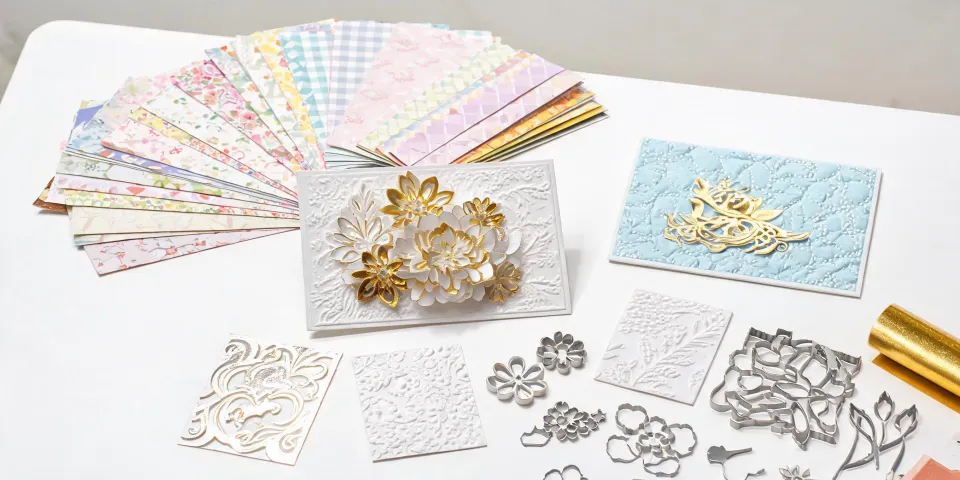
In 2023, we switched to the Spellbinders Platinum die cutting machine and used their embossing dies on textured cardstock. Same clients. Same mailing list.
Three clients — out of roughly 20 — specifically mentioned the cards. One asked which vendor we'd used for the design work. That had never happened before.
The per-unit cost went from about $1.10 to $1.65. A $0.55 increase per card. For a 500-card run, that's $275 extra.
If even one client relationship was strengthened enough to generate a $3,000 reorder, the math works. And I can tell you that two of those three clients placed follow-up orders in Q1.
That's not speculation. That's our invoice log.
"But Isn't Spellbinders Primarily a Paper Craft Brand?"
Fair pushback. I've heard it from our own production team.
And yes — Spellbinders is known for paper crafts, greeting cards, and their die cutting systems. The Platinum die cutting machine was built with paper and cardstock as the primary materials.
But with the right cutting plates and shims, it handles fabric, felt, and thin leather without issue. Not industrial-scale. Not heavy fabric runs. But for our volume — 200 to 500 units per order, mixed materials, seasonal rotation — it's been reliable.
One caveat I'll be upfront about: I've only tested this on medium-weight fabrics and craft felt. If you're working with heavy canvas, industrial upholstery fabric, or high-volume production runs above maybe 2,000 units a week, your experience will probably be different. My perspective is based on small-to-mid commercial orders. Ultra-high-volume or ultra-heavy-material scenarios fall outside what I can speak to.
The relationship between machine capability and material type is something you should test yourself with your specific fabric. I did. It took two afternoons.
Bottom Line: The Best Cutting Machine Is the One With the Lowest Total Cost
If someone asks me today which cutting machine is best for fabric in a commercial gift context, I'd say: stop comparing machines and start comparing ecosystems.
By all means, check the cutting pressure and the warranty. Then check the die library depth, the consumable costs, the rework rate, and — I can't believe I have to say this — the actual output quality on the materials you use most.
Spellbinders Platinum isn't the cheapest. It also isn't the most expensive. It's the one that made our TCO spreadsheet clean. Our rework dropped to under 2%. Our seasonal turnaround improved because we weren't waiting on custom dies. And our clients started noticing.
For context on just how low the stakes can be on the output side: per USPS pricing effective January 2025, a First-Class Mail letter costs $0.73. If you're making handmade greeting cards and shipping them, the postage alone is 73 cents. A $0.55 upgrade on the card itself — the thing the client actually holds and judges you by — starts to look pretty reasonable.
One more thing. I still kick myself for not building our vendor TCO model earlier. If I had, we'd have avoided 18 months of hidden costs that nobody saw coming. If you're still comparing by purchase price, do yourself a favor: open a spreadsheet. The numbers will surprise you.