It was the second Tuesday of October, and I was staring at a spreadsheet that made no sense.
I’m a procurement manager at a 40-person marketing agency. I’ve managed our client gift and print budget for six years—roughly $60,000 a year that I track in a cost system I built after getting burned on hidden fees twice. That year, the boss asked for “more personal” holiday gifts for our top clients. We had 375 names on the gifting list, five weeks, a $13,500 target, and no real plan.
If you’ve ever had a holiday project double your Q4 workload, you know the feeling.
The October Panic
In 2023, we spent $14,800 on client gifts, wrapping, and postage. That was 25% over budget. The biggest line item was the last-minute “one more box” requests from account managers, which is a fancier way of saying scope creep. I knew we couldn’t repeat that.
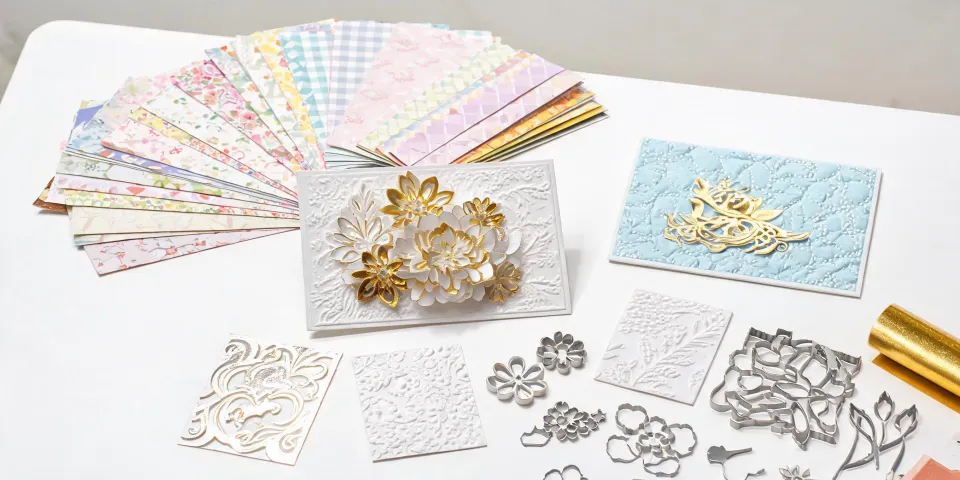
Then our design lead walked into my office holding her phone like it was evidence. She’d found Spellbinders Christmas cards—the kind made with die cutting machines, tiny windows, layered paper, and holiday figurines that looked like they came from a specialty paper shop. She said, “What if we made these ourselves?”
My first reaction was no. Our office is not a craft studio. We have a kitchen, a foosball table, and a printer that jams if you look at it wrong.
Then she showed me the Spellbinders mini die cutting machine. It was small enough to store on a shelf, and it could handle dies for cards, ornaments, and small holiday figurines. I did what I always do: I opened a spreadsheet (yes, I have a spreadsheet for this).
The Spellbinders Idea
Here’s what I learned: buying pre-made Spellbinders Christmas cards sounds expensive, but “expensive” depends on what you are comparing it to.
We got a quote from a local print shop for custom die-cut cards: $4.80 per card for 400 cards, plus $125 in setup fees, plus shipping. That setup fee matched the $50–$200 range we researched for die cutting setup at online printers. The quote did not include assembly or inserts. That was the baseline.
Then I priced the in-house route.
- Spellbinders mini die cutting machine: $199
- Two holiday die sets (City Holiday and a Classic Mouse holiday figurine set): $95
- Cardstock, envelopes, and liner sheets: $340
- Ink pads and adhesive: $65
- Shipping for supplies: $30
- Labor—our designer estimated 14 hours to cut, assemble, and check 400 cards: $448 at $32/hour loaded cost
Total: about $1,177, or $2.94 per card. That was about 39% less than the custom printed quote, and we had full control over the design. For a cost controller, that felt like a win.
But I should have known better. The first rule of procurement is that the first quote is never the full story. The machine and the dies were only the beginning.
The Hidden Cost That Almost Killed the Project
We ordered the machine and dies in mid-October. The Spellbinders mini die cutting machine arrived quickly, which was good. The bad news: we designed the cards at 5” x 7” because they looked better in the mockup. Our envelopes were A7, which USPS classifies as a large envelope. I did not check that until we were ready to print.
According to USPS pricing effective January 2025 (usps.com/stamps), a First-Class Mail letter costs $0.73, but a large envelope costs $1.50. That is a $0.77 difference per piece. For 400 pieces, it was $308 we had not planned for.
That was a classic “what are the odds?” moment. I knew I should have verified envelope sizing before ordering paper, but I assumed it would be fine. That was the one time it mattered.
I almost made a second mistake: I tried to shrink the card to save the postage. Our designer pushed back, and she was right. The 5” x 7” format was what made the Spellbinders Christmas cards look special. Shrinking it would have made the details feel cramped and the whole experiment would have looked like a DIY fail.
So we ate the extra $308. Then I started looking for other places to make up the difference.
The Reed Diffuser vs Electric Question
In the middle of all that, I had to settle the reed diffuser vs electric question one more time.
Our original gift plan was a card, a small ornament, and a fragrance item. For three years, we’d included reed diffusers from a vendor at $8.50 per unit. Then a new vendor pitched electric diffusers at $22 per unit. From a pure unit-cost view, the reed diffuser was a no-brainer. But total cost is not the same as the quoted price.
- Reed diffusers can leak in transit. In 2023, one seeping bottle ruined a gift box and cost us $42 to replace plus a conversation I did not want to have with a client.
- They are single-use. After 60 days, most of them end up in a drawer or the trash.
- Their perceived value has dropped. Clients have told us they receive way too many of them.
Electric diffusers had different problems: higher unit cost, heavier box, and the awkward question “do they already own one?” We were not going to call them reusable in our marketing unless we could back it up. Per FTC guidelines (ftc.gov), advertising claims need to be truthful and substantiated. That applies to us, not only to consumer brands.
In the end, we split the difference. We sent reed diffusers to the broader list of 350 clients and electric diffusers to our top 25 accounts. That added about $940 to the total, but it directly addressed the two complaints we kept hearing: “I have too many of these” and “this one leaked.”
If you are comparing a reed diffuser vs electric for your own corporate gifts, the real question is not which one is cheaper. It is which one fits the recipient, the shipping box, and the brand you are trying to project. For us, the answer was both.
What We Actually Sent
The final gift box was simple:
- A 5” x 7” Spellbinders Christmas card with a layered die-cut scene on the front and a handwritten note inside
- A die-cut Christmas ornament made with the same dies and red cardstock
- A small holiday figurine from the Classic Mouse set—we kept it light, not religious
- A fragrance item from the reed/electric split
- A kraft box with recycled paper wrap
Assembly was not smooth. We used the conference table for two full afternoons. There were paper cuts, a broken die, and one incident where someone ran glitter cardstock through the machine and glitter ended up everywhere. The cleanup bill was $80. I’m not putting that in the official cost report.
The response, though, was better than anything we had sent before. A retail client in Connecticut called to ask who made the cards. One account manager said her contact at a tech company put the Christmas ornament on the office tree and photographed it. Another client asked if we could make a customized version for their own customers. That turned into a small revenue opportunity we had not expected.
I do not want to overstate it. Out of 375 packages, we got maybe a dozen direct responses. But that is a better rate than any previous year, and the comments were specific enough to tell me the personal touch actually landed.
What I’d Do Differently
Here is the part I want you to remember: the Spellbinders mini die cutting machine is not magic. It is a tool. The magic—or the mess—comes from planning.
If you are thinking about doing this, here is the checklist I would run before buying anything:
- Confirm your final card size before ordering envelopes. USPS publishes the exact dimensions—use them. A 5” x 7” card in an A7 envelope is a large envelope, and the postage is about twice a letter.
- Put labor in your cost model. Machine time is cheap. Human time is not.
- Test 10 cards end-to-end before scaling to 400. We did not, and we paid for it.
- Ask the vendor about die compatibility before buying. Not every die cuts every material cleanly.
- If you are adding a fragrance item, ship a test box first. Leaks are a procurement nightmare.
The machine is not the story. The planning is.
This worked for us because we are a mid-sized agency with patient, craft-inclined people. If that does not describe your team, buying ready-made Spellbinders Christmas cards is still a good option. There is no shame in outsourcing the part that does not match your team’s skills.
Bottom line: I used to think the machine was the whole story. The real cost was in the details—the envelopes, the labor, and the willingness to stop and rethink the reed diffuser vs electric call. The good news is that those details are manageable. You just have to find them before they find you.
Next year, we will do it again, but I am buying a second die cutting machine before someone asks me to approve hand-cutting 400 ornaments. That is the kind of mistake I only need to make once.