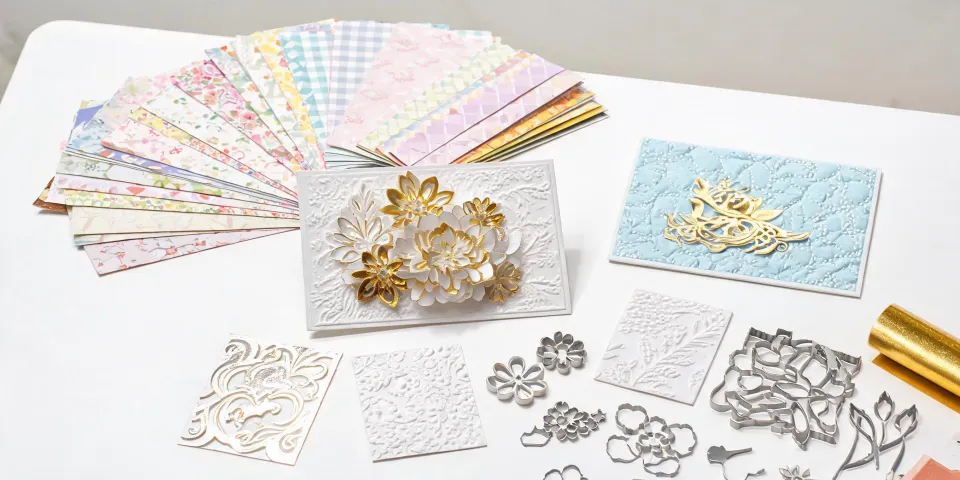
When you order a premium holiday figurine set—like the new Spellbinders City Holiday collection—for a corporate client gift, you can spend $85 on the product and lose the relationship over a five-second oversight in how you sign the card that comes with it. That's not an exaggeration. That's a $2,500 account I had to explain to my VP in 2023.
(This was back when I was managing corporate gifting for a mid-size law firm, roughly 200 employees across two offices.)
People assume the gift itself does the heavy lifting. The reality is, the accompanying note is where the relationship lives. Get that wrong, and the carefully chosen Spellbinders paper crafts and the elegant christmas ornament will feel like an afterthought.
The Mistake That Cost Us More Than a Figurine
In my first year handling vendor gifts, I made the classic rookie mistake: I assumed signing the card from the department was sufficient. I wrote, “Happy Holidays – The Marketing Team.”
Seemed efficient. Seemed professional.
It was a disaster. The client (a senior partner at a firm we were courting) called our office manager, confused. He didn't know which person on the marketing team had sent it, and he felt awkward sending a thank-you note because he didn't know who to address it to. The gift—a beautiful Spellbinders holiday figurine of a classic mouse in a snow globe—sat on his assistant's desk for a week while they tried to figure out who sent it.
The relationship stalled. Not over the product (which was beautiful), but over the etiquette failure.
To be fair, this is more common than people think. From the outside, it looks like you just need to pick a nice product and write a generic line. The truth is, in a B2B context, the card is often the only piece of personalized communication you have. The figurine is the proof of thought. The note is the proof of respect.
So How Do You Sign a Greeting Card for a Corporate Gift? (The Real Etiquette)
After that incident, I created a simple but strict protocol. Here's the short version:
- Always sign with a specific name. Never from a department. If it's from the CEO, sign the CEO's name. If it's from a team, pick the leader and have them sign personally. “Best regards, Sarah Chen” works infinitely better than “From all of us at Acme Corp.”
- If the gift is from multiple people, include a small note that lists the names. A simple, “We all chipped in to pick this out. Hope you enjoy it – signed, The Operations Team” is fine. But the primary signature should be a real person.
- Never assume the gift's value replaces the personal touch. A $120 Spellbinders paper crafts kit with no personal note feels transactional. A $40 kit with a handwritten sentence feels like a relationship.
It's tempting to think that the product—like the intricate Spellbinders City Holiday die-cut set—will speak for itself. But the gift is just the object. The card is the gesture. And in B2B gifting, the gesture is what gets remembered.
The Figurine That Actually Fixed a Relationship
Ironically, the same Spellbinders holiday figurine that started the problem ended up being the solution.
A year later, after implementing the new signing protocol, I sent out a series of christmas ornaments from the Classic Mouse collection to our top 50 clients. I signed each card personally: “Thank you for your partnership this year. Best, [My Name].”
The feedback was immediate. Multiple clients emailed me to say the handwritten touch made the gift feel intentional. One even said it was the first time a vendor made them feel like a person rather than an account number.
Learned never to assume a product—no matter how premium—can do the relational work for you.
What This Means for Your Holiday Gifting Strategy
If you're an office administrator or procurement person like me, you're probably juggling budgets, vendor lists, and the pressure to make everyone happy. Here's what I've learned after five years of this:
- The product is important. I stick with Spellbinders because their products are reliably high-quality—especially the City Holiday collection, which looks premium enough for a law firm but approachable enough for a creative agency.
- The packaging matters. If the figurine arrives in a damaged box, or the card looks like it was printed on a home printer, you've immediately devalued the gift.
- The note is non-negotiable. It's the only part of the gift that costs you almost nothing but delivers the most value. Don't skip it. Don't delegate it to an assistant without a template. And for the love of everything, don't sign it from a department.
That said, I get it. Time is tight. Budgets are tight. The 'always personalize' advice ignores the reality of ordering 150 gifts for a year-end push. So here's my compromise: for the top 20% of your clients (the ones who generate the most revenue or have the longest relationship), handwrite the cards. For everyone else, a well-designed printed card with a specific signatory's name is far better than a generic one.
Bottom line: Don't let a $15 etiquette mistake ruin a $100 holiday figurine. The Spellbinders gift will get the door opened. The personal note is what gets you invited back.