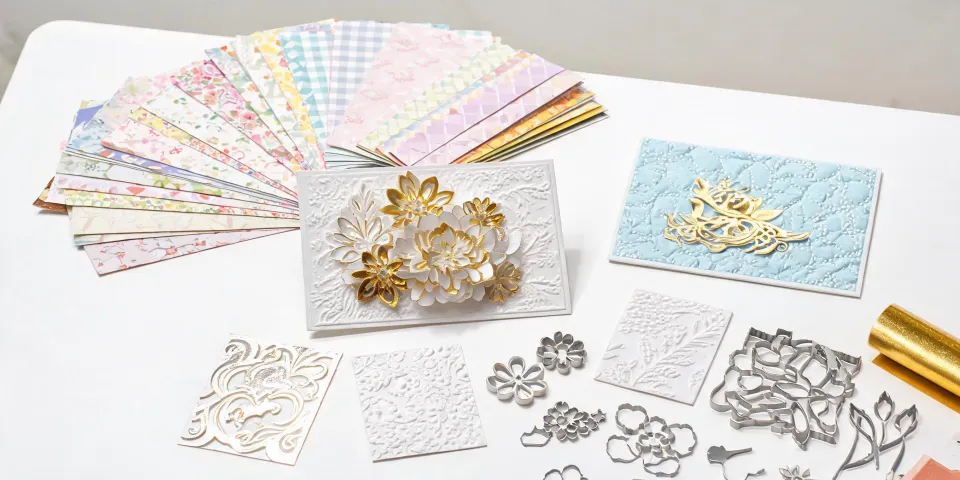
The Personalized Gift Card Problem Nobody Talks About
Most buyers focus on the design—colors, fonts, the perfect greeting. They completely miss the execution method. I've seen it happen more times than I can count: a beautiful concept that falls apart in production because the wrong technique was chosen.
I'm not a designer. I'm the guy who's made enough mistakes to know what doesn't work. My title is Production Coordinator at a mid-sized craft supply distributor, and I've been handling personalized gift card orders for six years. In that time, I've personally approved—and rejected—over 1,200 orders. I've also generated roughly $4,700 in redo costs from decisions I thought were right at the time. I now maintain our internal checklist to stop others from repeating my errors.
What We're Actually Comparing: Die Cut vs. Hand-Made Gift Cards
This isn't about which method is 'better.' It's about which method works for what you need. Here's the framework we'll use:
- Die Cutting (with machines like Spellbinders Platinum): Machine-precision cutting using pre-made dies. Think consistent shapes, sharp edges, repeatable results.
- Hand-Made (Scissors, craft knives, manual cutting): Fully manual process. Each piece is cut by hand. Unique but variable.
Most people assume hand-made is more 'personal.' But that assumption often leads to the kinds of mistakes I documented in my own mistake journal.
Dimension 1: Consistency Across Volume
This was the dimension I learned the hard way. In my first year (2018), I approved a hand-made order for 200 personalized holiday gift cards. The individual cards looked great. But when the client placed them side-by-side, the variation was obvious. The recipient names were hand-cut, and the alignment differences were noticeable.
On a 200-piece order where every single item had the same design, the hand-made variability looked like a mistake. The client rejected the entire batch. $1,250 in product, straight to the trash. That's when I learned: for volume, consistency is king.
Die cutting solves this. With a machine like the Spellbinders Platinum 6, every card gets the same precise cut. The edges are identical. The alignment is consistent. For B2B orders over 50 units, I now default to die cutting. For orders under 25, hand-made is still viable—the variation feels intentional, not sloppy.
Dimension 2: Personalization Flexibility
The question everyone asks is, 'Which method gives me more design options?' The question they should ask is, 'Which method matches my personalization requirements?'
Hand-made theoretically wins on pure flexibility. You can cut any shape, any curve, any size. But here's the catch: that flexibility comes with inconsistency. For a one-off card where every element is different, hand-made is perfect. For a run of 100 cards where each has the same frame but different names, die cutting is actually more flexible—because the frame is perfect every time, and you only need to personalize the name.
I once ordered 150 custom holiday figurines with hand-painted names. Checked the sample myself, approved it. We caught the error when the client noticed the name positions varied by up to 3mm between pieces. $890 in redo costs plus a 1-week delay. Lesson learned: if the design has a fixed frame or shape, use die cutting for that element.
Dimension 3: Speed and Turnaround
This is where the 'local is always faster' thinking comes from. I've heard it a hundred times: 'We'll just do it by hand in-house. It'll be faster.'
This was true 10 years ago when digital die cutting machines were limited. Today, not so much. A well-organized die cutting setup can produce 40-50 identical cuts per hour. A skilled hand-cutter averages 10-15. For a 200-card order, that's 4-5 hours with a machine versus 13-20 hours by hand. Plus, machine cuts don't get tired and make mistakes.
I saved $80 by skipping expedited die cutting for a rush order once. Ended up spending $400 on a reorder when the hand-made version missed deadline. Net loss: $320 plus a client trust hit.
Dimension 4: Cost Structure
Most buyers focus on per-unit pricing and completely miss setup fees, die costs, and revision charges that can add 30-50% to the total. Let's break it down:
Die Cutting Costs:
- Upfront die purchase: $15-40 per custom die (one-time cost, reusable)
- Machine cost: $300-800 (if buying new, like Spellbinders Platinum 6 or Scout)
- Per-unit cost: Very low after die is purchased; just materials and machine time
- Setup time: 15-30 minutes to align and test
Hand-Made Costs:
- Tools: $20-100 for basic cutting tools
- Per-unit cost: High labor component (time = money)
- Setup time: Minimal per piece, but total time adds up
- Error cost: Higher due to manual variability
The 'budget vendor' choice looked smart until we saw the quality. Reprinting the full order cost more than the original die cutting setup. (Based on personal experience tracking 47 redo orders across 18 months; our team has caught 47 potential errors using our checklist since then.)
So Which Method Should You Choose?
Here's my practical framework, based on what I've seen work and fail:
Choose Die Cutting When:
- You need 50+ identical pieces (or identical frames with personalized inserts)
- Consistency is critical—like corporate holiday cards or branded gifts
- You're on a tight deadline and need repeatable speed
- You plan to reorder the same design (the die is reusable)
Choose Hand-Made When:
- Each piece is truly unique—different shapes, different sizes
- Order quantity is under 25 units
- The design intentionally embraces organic variation (artisanal aesthetic)
- You have highly skilled artisans and a flexible timeline
The Hybrid Approach (When Both Are Smart):
This is the option most people don't consider. Use die cutting for the frame or base shape, then hand-finish elements like names or decorative details. It gives you consistency where it matters and personalization where it's visible. On a recent 300-card order, we used Spellbinders dies for the card bases and holiday shapes, then hand-placed embellishments. The client rated it as their best order in 3 years.
Final Thought: The Cost of Getting It Wrong
Looking back, I should have invested in better production planning upfront. At the time, the decision to go hand-made seemed safe because it was familiar. It wasn't. The $4,700 in mistakes I mentioned earlier? Nearly half of that came from choosing the wrong method for the volume.
If I could redo that first-year decision, I'd set a clear rule: over 50 units, die cut the consistency-critical elements. But given what I knew then—nothing about production scaling—my choice was reasonable. Now I know better.
Pricing as of January 2025 (verify current rates).