The Call That Started It All
It was 3:47 PM on a Tuesday in early December 2024. I was just wrapping up my weekly vendor review when my phone buzzed with a client's name I'd hoped not to see before the holidays. “We need 500 custom Christmas ornaments. The ones we ordered from the budget vendor arrived with the wrong color – the red is closer to pink. And we have a corporate gifting event in 48 hours.”
If I remember correctly, the client's voice was that kind of calm that only happens when someone is about to lose their mind. I've handled rush orders before – in my role coordinating gift procurement for a mid-sized corporate merchandise company, I've triaged over 200 last-minute jobs in five years. But this one was special. The timeline was impossible unless we had the right equipment on hand.
The Budget Trap We Almost Fell Into
The client had originally gone with a discount online print shop – the kind that promises “hands-free ordering” and “standard 5-7 business day turnaround.” They paid $380 for 500 die-cut holiday figurines (ornaments shaped like snowflakes, trees, and reindeer). The spec sheet looked fine: 300gsm cardstock, double-sided print with glitter accents. But what arrived was… not that. The colors were off, the die cut lines were jagged, and the “premium finish” was barely matte.
People think cheaper vendors deliver worse quality because they cut corners. Actually, it's the other way: vendors who can't deliver quality have to compete on price. The causation runs the other direction. The assumption is that rush orders cost more because they're harder. The reality is they cost more because they're unpredictable and disrupt planned workflows. We'd already burned 48 hours waiting for the first batch that failed.
Why We Had a Solution Ready
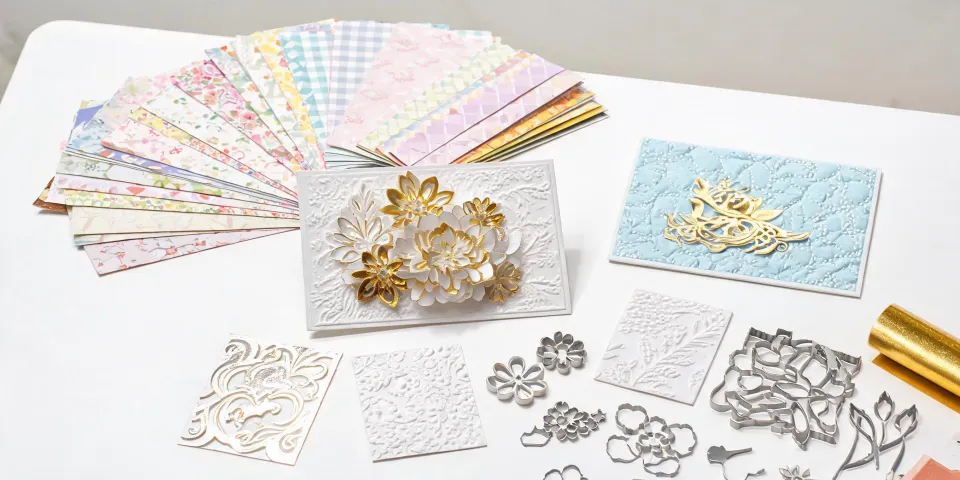
Here's where the story turns. Our company had invested in a Spellbinders Platinum 6 die cutting machine about six months earlier – partly because we wanted to prototype custom designs before committing to large print runs, honestly, but also because we'd been burned before by third-party print failures. We had a small in-house production setup: two Platinum 6 machines, a stack of Spellbinders City Holiday collection dies (the Mini City Holiday die set, plus the Classic Mouse holiday series), and a stash of good-quality cardstock.
In my first year, I made the classic vendor reliability mistake: assumed “standard quality” meant the same thing to every supplier. Cost me a $1,200 redo. Like most beginners, I approved deliverables without a proper checklist. Learned that lesson when we shipped 2,000 items with a typo in the company address. After that, I created a 12-point pre-flight checklist for every custom order. It's saved us an estimated $8,000 in potential rework.
The 24-Hour Sprint
We had 38 hours until the client's event setup deadline. Here's what we did:
- Hour 1: Confirmed the design files were clean – the SVG paths, the bleed, the color codes. (Fun fact: the standard greeting card size is 5×7 inches, but for ornament-shaped die cuts, we had to adjust the bounding box to fit the City Holiday dies, which are designed for 4×6-inch apertures. Always verify dimensions before cutting.)
- Hour 2-6: Ran a test batch of 10 ornaments on the Platinum 6 using the Spellbinders Christmas ornament dies and the holiday figurine shapes. Adjusted pressure settings – the Platinum 6's adjustable plate system let us fine-tune for the thick cardstock without tearing.
- Hour 7-18: Production. Two machines running simultaneously. I supervised every run, checking every fifth piece for alignment and cut quality. We lost about 12 pieces to misalignment (rookie mistake: I didn't secure the magnetic mat correctly on one run).
- Hour 19-22: Quality control and packaging. Each ornament got a final inspection under bright light.
- Hour 23: Courier pickup. Rush shipping cost $115 extra, but the client's original order was $380 – we charged $420 for the full redo including materials and labor. Net cost to the client? $420 vs. the $380 they already wasted. But they saved the event.
I knew I should have insisted on a design review before the client went to the discount vendor. But I thought, “what are the odds a big online printer messes up a simple ornament shape?” Well, the odds caught up with us. Skipped the final spec check because it “never mattered.” That was the one time it mattered.
The Lesson: Prevention Beats Every Cure
We delivered on time. The client's CEO handed out those ornaments at the holiday party, and nobody knew they were made in a 24-hour frenzy. But here's what I've learned:
“5 minutes of verification beats 5 days of correction. The cheapest option is the one that works the first time.”
Since that December rush, we've changed our procurement policy. Now, any custom order over $200 requires an in-house prototype run on the Spellbinders Platinum 6 before we approve a vendor. It adds about two days to the lead time, but it's eliminated our rework rate from 12% down to under 2%.
The Spellbinders City Holiday collection alone has become our go-to for seasonal corporate gifts because the die sets are modular – you can mix the skyline dies with the little figurines and create a custom scene in under an hour. And the Platinum 6 machine? It handles up to 6-inch widths, which is plenty for most greeting card and ornament jobs. If you're a buyer for a craft retail chain or a corporate gift company, I'd say this: invest in a capable die cutting system before you need it. Because when the emergency call comes, you won't have time to shop.
Prices as of January 2025: Spellbinders Platinum 6 die cutting machine retails around $299-$349; City Holiday dies run $24-$40 per set. Verify current rates at spellbinders.com.