The Surface Problem: A Simple Question With a Hidden Price Tag
Every November, someone asks me: 'How do you make a Christmas ornament wreath?'
It sounds like a craft question. But when you're ordering for a company that sells holiday decor to corporate clients, it's a procurement question. The answer isn't about ribbon or glue. It's about cost per finished piece.
I manage supplies for a 14-person promotional products company. I've handled craft spending of roughly $55,000 a year for six years, negotiated with more than 40 vendors, and logged every order in a cost tracking system. So when I say the wreath question makes me nervous, it's not because I can't tie a bow. It's because the obvious answer—buy a cutting machine, cut some shapes, glue them together—hides more expense than people expect.
Not ideal, but workable. Until it isn't.
The Deeper Problem: It's Not the Wreath, It's the Workflow
Here's the thing: most budget overruns in holiday craft production don't come from the big-ticket item. They come from the small, repeated decisions around it.
When I audited our 2023 holiday spending, I found a pattern. We weren't wasting money on fancy supplies. We were losing it in four places:
- Mismatched dies and machines. Dies that didn't cut cleanly on the machine we owned, causing re-cuts and wasted cardstock.
- Replacement costs. A die got misplaced in our storage, so we bought it again. Twice.
- Rush shipping. Last-minute orders for corporate gifts meant overnight charges. USPS rates effective July 14, 2024 made those even harder to swallow, and you should verify current rates at usps.com because they change.
- Trial and error. Staff time spent testing settings because no one had documented which plate setup worked for which die.
None of those show up on a price quote. But they show up on the P&L.
The deeper issue is that craft production is often treated as a creative task instead of a manufacturing process. In manufacturing, you wouldn't buy a press without checking the consumables. In craft, the machine comes first, and the support system comes after the first failed run—if it comes at all. That's the real reason holiday projects run over budget: not because the materials are expensive, but because the workflow around them is an afterthought.
Seasonal variety makes it worse. Holiday lines are one-time productions. You don't build a learning curve because next year is a different style. Every setup cost gets paid once, not amortized over a long production cycle. Individual dies bought after the season starts come with rush shipping. Bundled die sets bought before the rush spread the cost across multiple products.
I only believed in documenting setups after ignoring it once. We cut 300 holiday figurines with the wrong pressure setting and had to start over. The redo cost us around $1,200—or rather, $800 in materials and $400 in labor, though I might be misremembering the split.
To be fair, budget dies have their place. For one-off experiments, they're fine. For production runs, the math changes. The cheap die set we tested in Q2 2024 saved us $90 on paper. It cost us nearly $700 in scrap, rework, and staff overtime before we switched back to a reliable system.
The Real Cost: Total Cost of Ownership
I don't have hard data on industry-wide die-cutting waste. But based on six years of our own orders, my sense is that unplanned rework eats between 8 and 12 percent of seasonal craft budgets. That's not idle theory. That's the number I see when I filter our cost tracking system for 'replacement' and 'redo' as categories.
Total cost of ownership for a cutting machine includes:
- The machine price
- Die sets and compatible plates
- Storage that prevents loss and damage
- Shipping and rush fees
- The value of operator time
- The cost of failed batches
The lowest quoted price often isn't the lowest total cost. That lesson cost me a $3,000 order in 2022—or rather, a $3,000 order that came back completely wrong because we used a vendor with cheaper dies that didn't stay aligned.
I almost went with a different machine platform that year. The upfront cost was lower. But the dies were less consistent, and replacement parts took longer to arrive. I calculated the difference and switched back. I want to say the total savings was about 17 percent of that year's holiday budget, but don't quote me on that—I'd need to pull the actual spreadsheet.
Speed, quality, price. Pick two. For holiday projects, the one you can't sacrifice is quality, because the deadline is fixed. December 15 doesn't move because your die was backordered.
The Mindset Shift: Treat Dies and Machines as Infrastructure
The November 2023 rush order changed how I think about backup planning. We missed a corporate deadline because a critical die was out of stock. We had plenty of cardstock and ornaments. The missing piece was the tooling itself.
That's when I stopped treating our craft tools as individual purchases and started treating them as infrastructure.
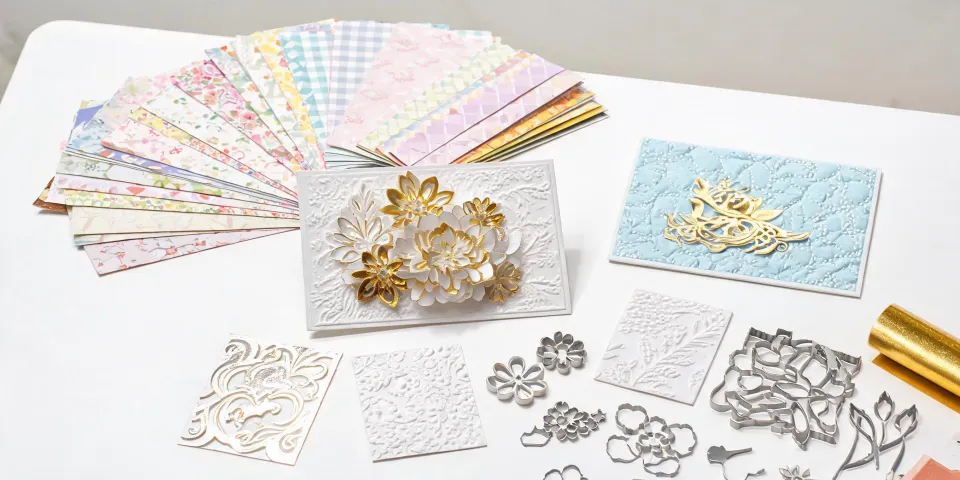
What was best practice in 2020 may not apply in 2025. The fundamentals—clean cuts, repeatable results, reliable delivery—haven't changed. But the execution has transformed. Spellbinders die cutting machines are a good example. The Platinum series isn't the cheapest machine on the shelf. But in our workflow, the dies, the machine, and the storage system work as one unit. That integration is what lowers total cost.
When we standardized around Spellbinders die cutting machines in 2024, I noticed something in our quarterly review: less time spent re-cutting, fewer 'mystery' dies missing from storage, and a smoother handoff between our design person and the production team.
Spellbinders Craft Stax storage might sound like an optional extra. It's not. If a $10 die gets lost once, you pay $10 to replace it plus the staff time to search. A Craft Stax system is a line item that prevents reorders. It's boring. It works.
So, How Do You Make a Christmas Ornament Wreath?
Now the original question—and I'll keep this short, because the problem is already clear.
To make a Christmas ornament wreath for production:
- Use a cutting machine to die-cut a wreath base from heavy cardstock or chipboard. A Spellbinders die cutting machine with the right die set gives you a clean, uniform ring without scoring or tearing.
- Cut holiday figurine pieces, stars, or bauble shapes with compatible dies. This is where a reliable die set pays for itself—clean edges mean less assembly time.
- Assemble the ornament clusters around the ring, then add ribbon and a hanger.
- Charge a price that covers your full cost per unit—including setup, storage, and rework buffers.
That last step is the one most people skip. They calculate the cardstock and the ribbon, but not the die wear or the wasted hour when a machine jams.
The answer to the question is simple once the workflow is right. It's not about magic. It's about having a system that doesn't leak money at every seam.
Had two hours to decide before the holiday deadline in 2024. Normally I'd compare three cutting machine options and run a full cost model. There was no time. I went with our usual platform based on trust alone. In hindsight, I should have prepared that comparison earlier. But with the CEO waiting, I made the call with the information I had.
That's the honest version. Most of this isn't glamorous. It's inventory control and making sure the dies are in the right place. But that's what keeps a craft business from becoming a hobby that hemorrhages cash.
Spellbinders didn't fix every problem. We still have rush fees. We still occasionally lose a die. But the ratio of output to stress is better than it was three years ago.
And when a client asks me next November how to make a Christmas ornament wreath, I can give them the real answer: build the system first, then make the wreath. The wreath is the easy part.