-
1. What's the fastest way to produce Spellbinders Christmas cards at scale?
-
2. Can I make a greeting card in a computer and then finish it with Spellbinders?
-
3. What should I know before buying Spellbinders Craft Stax for a holiday run?
-
4. What are the hidden time traps for Christmas ornaments and holiday figurines?
-
5. Should we make holiday figurines in-house or buy them ready-made?
-
6. How do you price a rush holiday order without losing your shirt?
-
7. How do I keep cards and ornaments under USPS size limits?
In my role coordinating make-to-order production for a gift and craft supplier, I've handled 200+ rush holiday orders. A ton of them start with the same ask: 'We need Spellbinders Christmas cards, and we need them fast.' Here are the questions buyers ask when the clock is running, plus the answers I give without the marketing filter.
Quick list if you want to jump around:
- What's the fastest way to produce Spellbinders Christmas cards at scale?
- How do you make a greeting card in a computer and then finish it with Spellbinders?
- What should I know before buying Spellbinders Craft Stax for a holiday run?
- What are the hidden time traps for Christmas ornaments and holiday figurines?
- Should we make holiday figurines in-house or buy them ready-made?
- How do you price a rush holiday order without losing your shirt?
- How do I keep cards and ornaments under USPS size limits?
1. What's the fastest way to produce Spellbinders Christmas cards at scale?
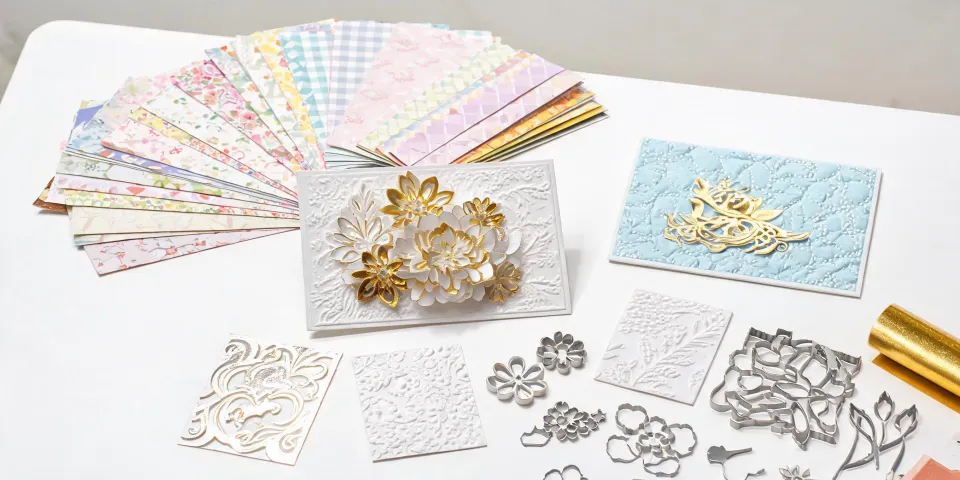
Look, if I need 200 cards by Friday, I don't hand-cut. It's a batch job, not a one-off. I use a Spellbinders Platinum or Grand Calibur machine with a Craft Stax die set. Last December, we produced 500 card fronts in one afternoon using a holiday Craft Stax set—two people, one machine, and a stack of pre-scored card bases.
The time-saving move is to split the work: computer for layout, printer for flat color, dies for the shape and deboss. That keeps the machine from becoming a bottleneck. A standard A2 card (4.25 in by 5.5 in) fits USPS letter size, so you're also mailing without extra postage.
Not ideal, but recoverable: we once skipped a die-check and printed 50 card fronts before running the die. The off-center emboss showed up on the first 25. Now we run a proof on the exact paper before the full batch.
2. Can I make a greeting card in a computer and then finish it with Spellbinders?
How to make greeting card in computer is a frequent search phrase, and the answer is yes—but it's a two-part workflow. Build the card front in Canva, InDesign, or Affinity, print it onto 110 lb cardstock, then use Spellbinders dies to cut and deboss the focal shape. The computer handles layout and color; the die handles physical depth.
Communication failure story: In October 2024, a client said 'standard Christmas cards.' I assumed A2. They meant 5 in by 7 in. We discovered it when their envelope samples arrived, and it cost us a day. Now I ask for envelope dimensions before quoting, not after.
If you're designing in-house, keep a 0.125 in margin and export with bleed. If the layout is complex, honestly, I'd recommend a designer. That's not our core strength, and I'd rather tell a client than fake it. Granted, the print-and-die workflow still needs a machine run, but it's the best way to get from PDF to finished card.
3. What should I know before buying Spellbinders Craft Stax for a holiday run?
Spellbinders Craft Stax sets are stackable die sets that store almost flat. That's a nice shelf benefit, but the production benefit is variation: one set often gives you several sizes of the same shape. For a holiday order, that means you can cut a large snowflake, a medium ornament, and a small tag from one set without changing tools.
Our rule: check the die size against the machine platform before quoting. A large stax layer might need an extended base or adapter plate. In 2023, a client asked for 300 tabletop holiday figurines in four colors. The Craft Stax set gave us the same die in two sizes, which cut setup time in half. We still finished in three days—normal turnaround would have been six.
If you ask me, this is a no-brainer for anyone stocking an in-house production shelf.
4. What are the hidden time traps for Christmas ornaments and holiday figurines?
Here's the thing: a die-cut Christmas ornament is not finished when it's cut. Layers need adhesive, glitter needs drying, foam dots need settling. All that invisible time eats deadlines.
Our worst miss in 2024: we didn't check how long a pearlescent ink takes to dry before stacking. Result: 120 smeared ornaments. We paid $200 in overtime to redo them and added a 30-minute 'don't stack' hold on the rack.
For holiday figurines, assembly is the trap. A three-layer figurine with foam adhesive runs about four minutes per piece. For 100 pieces, that's nearly seven person-hours before packaging. We quote assembly time honestly now. If a client needs 2,000 identical figurines, we point them to a commercial converter—that's outside our sweet spot.
5. Should we make holiday figurines in-house or buy them ready-made?
Depends completely on volume and customization. For a short run of 100 custom holiday figurines, we make them in-house. For 5,000 identical pieces, hire a mass manufacturer. The data said outsource; I overruled it because I liked the control.
To be fair, our in-house figurines looked great. But we lost money on labor. That was a judgment call, and I've stopped treating it like the right one.
More importantly, we tell clients what we don't do. The vendor who said 'this isn't our strength—here's who does it better' earned my trust for everything else. I'd rather work with a specialist who knows their limits than a generalist who overpromises.
6. How do you price a rush holiday order without losing your shirt?
Rush pricing should cover tooling changes, extra labor, and the fact that we might have to bump another job. It's not a penalty; it's the true cost of speed.
In 2024, a corporate account needed 250 gift tags in 48 hours. Our regular price was around $300. We charged $420 plus an $80 setup—about a 40% rush premium—and delivered the next morning. The extra margin paid for the overtime and the courier.
If you want a baseline, major online printers list rush premiums around next business day at +50–100% over standard, 2–3 days at +25–50%, and same-day at +100–200%. That's from publicly listed fee structures on online printer sites, as of January 2025. Our internal fee is similar. I think the exact number matters less than charging it upfront.
7. How do I keep cards and ornaments under USPS size limits?
A standard A2 card is fine for USPS letter mail: at least 3.5 in by 5 in, no more than 6.125 in by 11.5 in, and no thicker than 0.25 in. If you attach a dimensional holiday figurine or a layered ornament, measure the whole thing. Over 0.25 in, it's a flat until 0.75 in; over that, it's a parcel with a higher rate.
According to USPS pricing effective January 2025, First-Class Mail letter (1 oz) is $0.73. A large envelope (1 oz) is $1.50, with $0.28 for each additional ounce. Source: usps.com/stamps
And if you're marketing the paper as recyclable, keep the claim truthful. Per FTC Green Guides (ftc.gov), environmental claims need substantiation. Less exciting than a die set, but it keeps the brand out of trouble.