The Call That Started It
In December 2024, three days before a corporate holiday gala, I got the call. The client’s original ornament supplier had just said, “Sorry, we can’t deliver.” 80 custom Christmas ornaments were supposed to be on the gift tables. Instead, there were 80 empty gift boxes.
I coordinate production for a small craft company, and I’ve handled 50+ rush orders in five years, including same-day turnarounds for event clients. This one still made my stomach drop. The client wasn’t asking for cheap. They asked if we could save the event.
We said yes. Then the panic hit.
Why Spellbinders Christmas Dies Made the Impossible Doable
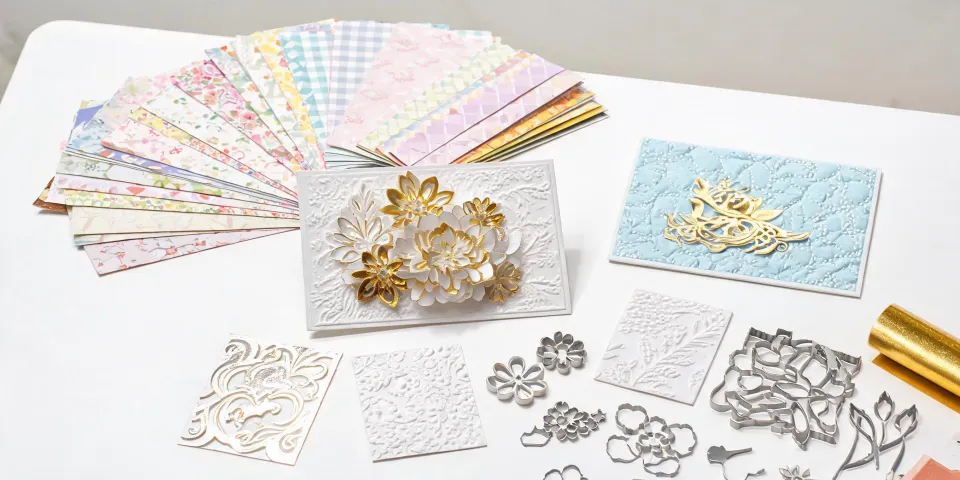
Our shop builds custom ornaments and greeting cards around the Spellbinders ecosystem: Spellbinders die cutting machines, Spellbinders Christmas dies, and a library of cutting plates and detailed dies we’ve tested on everything from textured cardstock to glitter paper. I won’t pretend the brand name alone solved the problem. What mattered was that I knew exactly what the machines could and could not do.
A cutting machine has to be predictable. In my first year, I made the classic spec error: I assumed “standard” meant the same thing to every vendor. It cost me a $600 redo and a client’s patience. These days I care more about repeatability than speed. A machine that gives you the same cut 80 times in a row is worth more than one that cuts fast but drifts.
The numbers said we should outsource to a bigger commercial print shop with a faster turnaround. My gut said no. Their sample felt generic, and the client had specifically asked for a handmade premium look. Every spreadsheet pointed to “outsource.” Something felt off. Turns out the commercial shop’s “we’ll check on that” email was a preview of a late delivery.
We ran it in-house.
The 72-Hour Production Run
Here’s what the rush actually involved. Each ornament had three layers:
- An outer circle cut from deep red cardstock using one of the Spellbinders Christmas dies.
- A middle holiday motif—a wreath or a snowflake—cut from gold foil cardstock.
- A backing circle with the client’s logo and a small ribbon hole.
Then we adhered the layers, added a velvet ribbon, and packed each finished ornament in a gift box with a handwritten note. 80 pieces. 72 hours.
The cutting machine mattered in every layer. The Spellbinders Platinum held alignment consistently, so all three die-cut pieces nested without a visible gap. We divided the work between two machines and two people. At roughly 2.5 minutes per layer, that was about 10 hours of machine time, plus assembly. It’s not a high-volume solution. For a premium small-batch order, it was the right pace.
We also added a coordinating card front to each gift box, using the same holiday die. Keeping it at 5×7 meant it could go into a standard USPS letter envelope, which mattered for the client’s follow-up thank-you mailing. According to USPS (usps.com), a letter can be up to 6.125 x 11.5 inches and 0.25 inch thick. If the envelope weighs one ounce or less, the postage for a First-Class Mail letter was $0.73 as of January 2025.
The client paid a $650 rush fee on top of the $2,800 base cost. That money bought certainty, not just machine time.
At hour 20, we hit a problem. The gold foil layer was too small for the red base. The die had been mounted slightly off-center in an older plate. We stopped, swapped the die, recut the gold layers, and stayed late. No drama. Just the next best decision.
Even after choosing to run in-house, I kept second-guessing. What if the adhesive bled through the cardstock? What if the ribbon holes weren’t centered? Did I really have time for a third option? I approved the rush order for extra cardstock and immediately wondered if I’d made a mistake. I didn’t relax until I held the first complete ornament in my hand and saw the layers line up.
What Size Is a Lanyard Card?
In the middle of that chaos, the client’s event manager asked a question that had nothing to do with ornaments: “What size is a lanyard card?” They needed staff badges for the gala, and their badge supplier had gone silent.
The short answer: a standard lanyard card is 3.375 by 2.125 inches, or about 85.6 by 54 millimeters. That’s the ID-1 size used for credit cards and many driver’s licenses, and it’s the format most badge holders expect.
I had to double-check that number during the call, so I’m not going to pretend I had it memorized. Don’t hold me to it for every custom printer, but if you’re searching “what size is a lanyard card” because a supplier just asked you, 3.375 by 2.125 inches is the most likely answer. According to ISO/IEC 7810, the ID-1 format is exactly that. It saved us from ordering the wrong badge holders.
We didn’t cut those lanyard cards on the Spellbinders machine. But the question reminded me that a detail like a card size can be the difference between a smooth event and a desk full of unusable badges.
Lessons: Quality Is Brand Perception
The finished ornaments arrived 11 hours before the gala. The client sent a photo from the gift table. The red and gold layers looked crisp under the ballroom lighting. A donor asked who made them. That email came to us the next week.
This is the part that changed how I talk about quality. Yes, the ornaments were just cardstock, ribbon, and a die-cut shape. But the perceived value was not about material cost. It was about intention. A crooked layer or a misaligned die would have said “we don’t care” to every donor who opened the box. The Spellbinders cuts were consistent, the layers aligned, and the final piece felt like a premium object.
To be fair, the outsourced option could have been faster and maybe cheaper. But it wouldn’t have matched the client’s brand. That’s why I’m careful not to say the lowest quote is always right. Sometimes the quality of the finished piece is the message.
We now quote every custom ornament job with a 48-hour internal buffer. That policy came from too many close calls. It doesn’t guarantee we’ll never rush. It means we don’t start at zero.
I’ve seen enough rushed events to know how this pattern goes. But when I say “enough,” I do not mean a few. I mean dozens of orders where the tiny details—card sizes, die alignment, ribbon holes—decided the whole outcome.
If you’re planning a holiday mailing or a small custom ornament run, give yourself the same cushion. Use a cutting machine you trust. Check your sizes before ordering badge holders. And if the lanyard card question comes up, remember: 3.375 by 2.125 inches. I’m not 100% sure that’s every card on the market, but it’s the standard for a reason.
The right size. The right die. The right machine. Simple. That’s it.