-
A quick note before the questions
-
1. Is the Spellbinders Platinum die cutting machine worth it for a small business?
-
2. Craft Stax or individual dies: which is cheaper in the long run?
-
3. What’s the actual cost difference between hand cutting and die cutting?
-
4. Can I use Spellbinders dies with other die cutting machines?
-
5. What size greeting card should I make to keep postage costs low?
-
6. Are die-cut holiday figurines a good margin product?
-
7. How to crochet a Christmas tree ornament—and what does that have to do with Spellbinders?
-
8. What should I check before making eco-friendly claims about craft products?
A quick note before the questions
I’m a procurement manager at a 12-person gift and paper goods company, not a craft influencer. I’ve tracked about $180,000 in cumulative craft supply spending across six years and documented every order in our cost tracking system. When I audited our 2023 spending, I found that most of our overruns didn’t come from the big-ticket items. They came from small things (like dies that didn’t fit, storage that didn’t work, and postage surprises). This FAQ is based on those spreadsheets. The fundamentals haven’t changed: count the total cost, not the sticker price. But a lot of the “best practices” from 2020 feel stale in 2025.
1. Is the Spellbinders Platinum die cutting machine worth it for a small business?
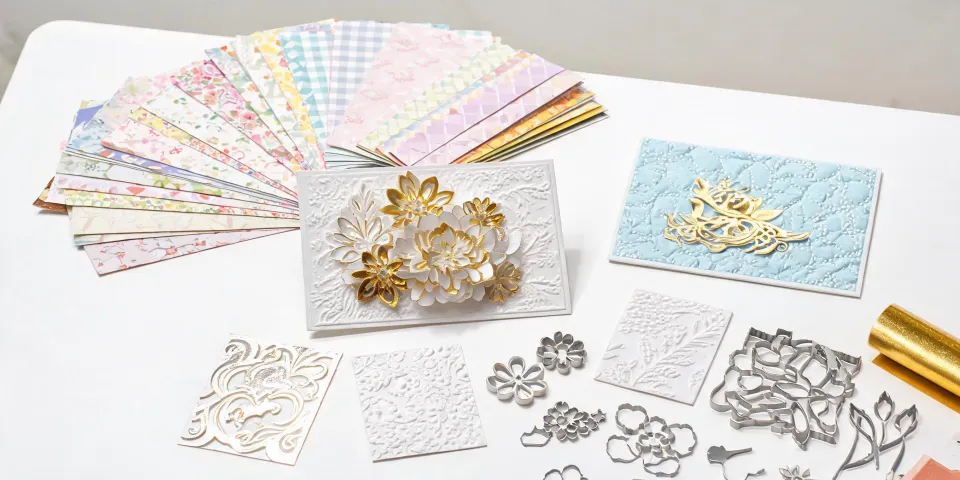
If you’re making 20 holiday cards a year, no. If you’re producing 200 greeting cards or a line of die-cut holiday figurines, it can pay for itself before the first season ends. I’m not saying that from a spec sheet. I ran the numbers for our shop. The upside was a faster winter line. The risk was a machine sitting idle after January. I kept asking myself: is that risk worth the labor savings? For us it was, but only because we planned batch production before the machine arrived. The Platinum handled thicker paper and layered dies better than our old unit, which meant fewer jammed cuts during rush week.
One thing I’d do differently: test the machine with your actual cardstock before committing to a full line. Looking back, I should have ordered a sample pack of 80 lb and 110 lb cardstock first. At the time, we just used what was in the cabinet. It worked, but the rejects would have been lower with better paper.
2. Craft Stax or individual dies: which is cheaper in the long run?
Craft Stax are Spellbinders’ stackable storage cases for standard-size dies. They’re not a marketing add-on if you buy dies in volumes—without a storage system, I spent too many hours hunting for a single snowflake die. Time is part of total cost. A la carte dies cost more per die, but you buy only what you’ll use. Sets lower the per-die cost and often include shapes you’ll never cut. If I remember correctly, we used only three out of twelve dies from our first seasonal bundle. Don’t quote me on the exact ratio, but it was low.
My advice: start with a small set tied to a specific product, then expand only when a customer order justifies it. Craft Stax make sense once you have more than ten dies. At that point, the storage cost is lower than the cost of re-cutting a lost die or delaying a rush order because you can’t find the one you need.
3. What’s the actual cost difference between hand cutting and die cutting?
At low volume, hand cutting is cheaper because the only hard cost is your time. But time isn’t free. For a layered greeting card, hand cutting one card might take 8–10 minutes. With a die cutting machine and a Spellbinders die, the cutting pass takes a minute or two, and the rest is assembly. If your effective labor rate is $25/hour, hand cutting costs about $3.50 in labor per card. Amortizing the machine and die over a year of regular production puts the cutting cost closer to $0.80 per card—at least, that’s been my experience with small-batch greeting card runs.
The catch is utilization. If the die is for one niche holiday and you never use it again, the per-unit cost jumps. I built a simple cost calculator after getting burned on hidden costs twice. It’s just a spreadsheet with three columns: equipment, annual passes, and cost per pass. That one sheet has saved us more than any vendor negotiation.
4. Can I use Spellbinders dies with other die cutting machines?
Most Spellbinders dies use a standard sandwich format, so they can work in other machines. But “can” is doing a lot of work in that sentence. I assumed our old machine would handle a thicker premium die because the packaging said ‘compatible with most machines.’ Didn’t verify. Turned out the cutting pad size was slightly different, and I ruined a sheet of expensive cardstock before checking the manual.
The fundamentals haven’t changed: pressure, clearance, and pad thickness matter more than brand names. Spellbinders’ own Platinum machines are the safer choice if you want to remove that variable from your workflow. But if you already have a machine that cuts consistently, you don’t need a new one just to buy their dies.
5. What size greeting card should I make to keep postage costs low?
This is where small shops lose margin. According to USPS (usps.com), as of January 2025:
First-Class Mail letter (1 oz): $0.73
First-Class Mail large envelope (1 oz): $1.50
A typical folded card in an A2 envelope (4.375 x 5.75 inches) qualifies as a letter if it’s flexible, uniform in thickness, and under 1/4-inch thick. That’s the sweet spot.
If you add a thick die-cut insert, a bow, or a small crochet ornament inside the card envelope, you can lose letter pricing. A die-cut holiday figurine definitely won’t fit a letter envelope. Keep the card flat, use thin cardstock for inserts, and ship bulky items as packages. Using a Spellbinders die to cut a light card insert keeps the thickness down. This sounds obvious, but it’s the kind of detail that only shows up when you’re reconciling your shipping invoice.
6. Are die-cut holiday figurines a good margin product?
They can be, but only if the design is production-ready. A single sheet of cardstock costs maybe $0.50, the cutting pass costs almost nothing after the equipment is paid for, and a well-designed figurine can sell for $8–$15. The challenge is structure. Our first holiday figurine batch was too fragile because I tried to save money with 65 lb cardstock. Hindsight: I should have used 110 lb and prototyped the fold. At the time, it was what we had in the cabinet. The finished pieces looked great on the table and collapsed in transit.
What worked later was a Spellbinders holiday die set with clean score lines and a sturdy base. The word “holiday” in the title doesn’t matter; the fold geometry does. Make a test sample, ship it to yourself, and see if it arrives intact.
7. How to crochet a Christmas tree ornament—and what does that have to do with Spellbinders?
Honestly, I’m not a crochet expert. But when customers started asking, I had to understand the cost side. A basic crochet Christmas tree ornament is a small cone: start with a magic ring, increase a few rounds to create a flat base, then work even or decrease slightly to form the tree shape. Stuff it lightly, close the bottom, and add a chain loop at the top for hanging. The pattern is easy to find, but the labor is not cheap.
Here’s where a die cutter helps. If you’re selling crochet ornaments, hand-cut tags and packaging can look inconsistent. A Spellbinders die cut can create a small branded tag or a card insert in one pass. It makes the ornament feel like a product instead of a hobby. I’ve never fully understood why fiber crafters mix paper dies into their workflow, but for packaging, it works.
8. What should I check before making eco-friendly claims about craft products?
This isn’t the first thing people think about when buying a die cutting machine, but it matters once you sell to corporate clients. Per FTC guidelines (ftc.gov):
Environmental claims must be truthful and substantiated. The FTC Green Guides (16 CFR Part 260) treat “recyclable” as requiring access to recycling facilities for at least 60% of consumers.
So if you call your Spellbinders Craft Stax storage case “recyclable” or your greeting card “compostable,” you need to verify what local programs actually accept. Glitter and plastic coatings can make paper products not recyclable, even if the base material is.
I’m not saying this to be preachy. It’s a hidden compliance cost. A corporate buyer can and will ask for documentation. If you can’t back it up, you can lose the account. That’s a more expensive mistake than a slightly higher supply cost.