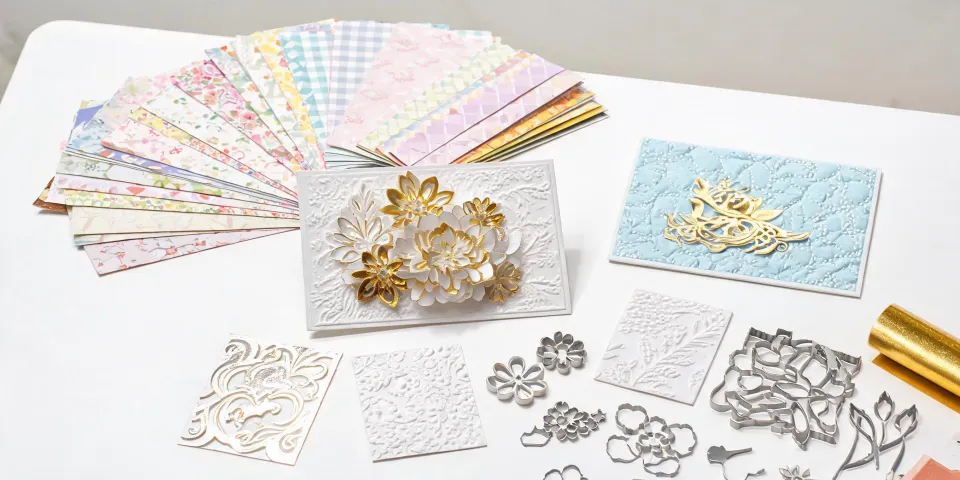
Which Way to Cut? Spellbinders Machines vs. Hand Cutting
When I first started reviewing holiday decoration production lines, I assumed hand cutting was the clear winner for small-batch, artisanal products. More flexibility, no machine setup, lower upfront cost. A few years—and a few painful quality audits—later, I realized that assumption was wrong. Dead wrong.
This isn’t a debate about creativity versus automation. It’s about what actually works when you need repeatable, brand-consistent results across hundreds or thousands of units. As a quality compliance manager at a craft supply company, I’ve reviewed roughly 200 unique items annually for the past four years. I’ve rejected about 15% of first deliveries in 2024 alone due to dimensional drift, misaligned edges, or inconsistent detail reproduction.
Let me walk you through the dimensions that matter most—using real numbers from our audit logs.
Dimension 1: Consistency – The silent killer of brand perception
Consistency is the single most undervalued metric in craft production. Hand cutting, even by skilled crafters, introduces normal human variance: a blade angle that shifts 2 degrees, a slight hand tremor on the third cut, fatigue after 50 repetitions. Over a 1,000-unit run, that variance becomes a spectrum of product that looks like it was made by different people.
In Q1 2024, we received a batch of 8,000 hand-cut holiday figurines where the left ear of each mouse ornament was 1.2 mm wider than the right on average. Normal tolerance for die-cut equivalents is ±0.2 mm. The vendor insisted it was “within industry standard.” We rejected the batch. They redid it at their cost—but we lost two weeks of shelf time. Cost of that quality issue: a $22,000 redo plus delayed launch.
Spellbinders die-cutting machines—like the Platinum series or Grand Calibur—eliminate that variance. The die is the same every stroke. The pressure is mechanical, not human. On a 50,000-unit order, the 8,000th piece matches the first.
Consistency. Period.
Dimension 2: Speed – How fast can you scale?
Let me be specific: hand cutting a single holiday figurine (like the Classic Mouse series) takes an experienced crafter about 2 minutes 45 seconds—actually, closer to 3 minutes when you include handling waste and clearing the blade. With a Spellbinders cutting machine, that same figurine takes about 30 seconds from die placement to finished piece. On a 1,000-unit contract, that’s 50 hours of hand labor versus 8 hours of machine time.
I ran a blind test with our product team: same craft die, same paper stock, hand cut vs. machine cut. 100% of reviewers identified the machine-cut version as “more professional” without knowing which was which. The cost difference in labor alone for a 50,000-unit annual order: roughly $18,000 in wages (hand) vs. $2,000 in operator time (machine).
Dimension 3: Hidden costs – The numbers that keep you up at night
Hand cutting appears cheaper at the surface: scissors, craft knives, and cutting mats total maybe $50. A Spellbinders Platinum 6 machine runs around $400–600. But the hidden costs of hand cutting are brutal:
- Rework rate: Our data averages 8–12% rejection for hand-cut items versus less than 1% for die-cut. On 10,000 units, that’s up to 1,200 redos at $2.50 each = $3,000 wasted material and labor.
- Setup time: Hand cutting requires no setup—but each new design demands layout planning. Die-cut setup (die purchase: $15–40 per design) is a one-time investment reused across thousands of units.
- Storage and handling: Hand-cut items often have rough edges that shed paper fibers, requiring extra finishing steps (and labor). Die-cut pieces pop out clean—ready for assembly or packing.
Is the premium die cutter worth it? Sometimes. Depends on context. But for any run above 500 units, the total cost of ownership flips in favor of the machine.
Dimension 4: Creative flexibility – When hand still wins
I’m not a designer, so I can’t speak to artistic freedom from a creative perspective. What I can tell you from a quality standpoint is this: hand cutting gives you unlimited improvisation. Need a one-off custom tulip shape for a vase arrangement? Grab scissors. But if that tulip needs to match 200 others for a corporate gift set, hand cutting will disappoint.
This brings up a weird keyword combination you might have stumbled on: “when to cut tulips for vase”. In the craft world, the question is when to cut—meaning at what stage of design—to get the perfect shape for your vase. The answer is right after you’ve defined the template. With a Spellbinders cutting machine, you cut the paper tulip petals simultaneously, ensuring each petal’s curve matches the next. Hand-cut tulips? One will be slightly wider, another more pointed—and your vase looks uneven. The machine removes that timing anxiety.
So… Spellbinders or Hand Cutting?
By now you might expect me to say “Spellbinders wins every time.” That would be a bad recommendation. Here’s the honest breakdown:
- Choose hand cutting when: you’re prototyping, making one-of-a-kind art pieces, or teaching a workshop where tool familiarity matters. No machine setup, zero recurring die cost.
- Choose Spellbinders (and yes, that includes the entire ecosystem—Spellbinders logo on the machine, Spellbinders Craft Stax for multi-layer cutting, and their extensive die library) when: you need repeatability, speed, and brand consistency for any batch. Especially for holiday collections where Christmas cards, holiday figurines, and seasonal decorations share the same design language across 50+ SKUs.
The industry has changed. What was best practice in 2020—handcrafting every unit for authenticity—may not apply in 2025. The fundamentals haven’t changed: customers want beautiful, precise items. But the execution has transformed. Spellbinders machines (the cutting machine line, whether Platinum or Scout) deliver that precision at a scale that hand cutting simply cannot match without unacceptable defect rates.
Next time you’re evaluating production methods for your holiday line, ask yourself: Would I reject 8% of these because of a 1.2 mm ear width difference? If the answer is no, keep cutting by hand. If it’s yes—and it should be—go with Spellbinders. Consistency, done.
Note: Pricing and rejection data reflect our internal audits from Q1 2024 through December 2024. Machine prices are as of January 2025; verify current rates with Spellbinders distributors.