-
What you'll find here
-
1. What is Spellbinders and why does it work so well for greeting cards and holiday figurines?
-
2. Which Spellbinders cutting machine should I choose for my business?
-
3. How do I cut daffodils for a vase using Spellbinders dies?
-
4. What are Spellbinders City Holiday collections and how can they help with seasonal products?
-
5. Can I use Spellbinders for production-scale orders?
-
6. What are the most common mistakes when using Spellbinders for greeting cards?
- 7. Are there any limitations I should know about before committing to Spellbinders ecosystem?
What you'll find here
If you're shopping for a Spellbinders cutting machine, wondering about the City Holiday series, or trying to figure out how to cut daffodils for a vase using dies — these are the questions I get asked every week. I've been managing production for a custom greeting card company for the past 4 years, and we've run hundreds of rush orders through various Spellbinders machines. This FAQ covers what I've learned the hard way.
1. What is Spellbinders and why does it work so well for greeting cards and holiday figurines?
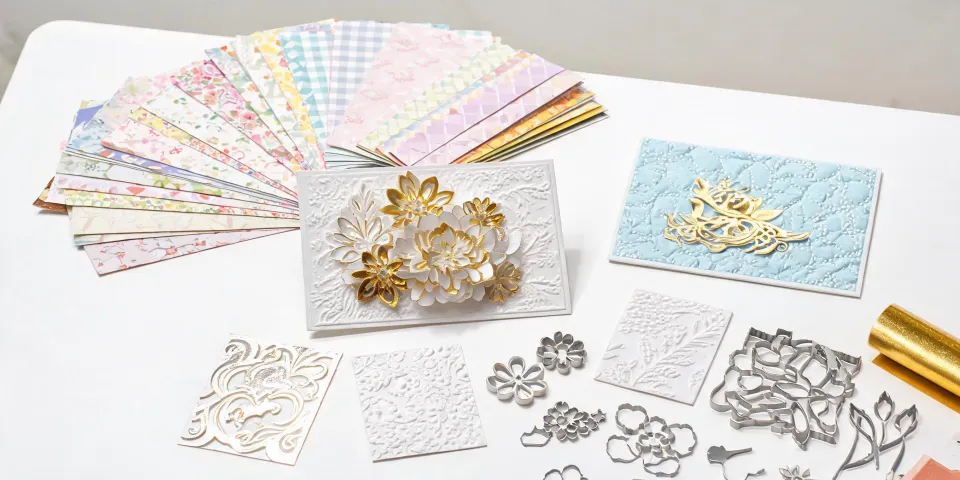
Spellbinders is a brand that makes die cutting machines, metal dies, and paper crafting supplies. Their main advantage is precision: the dies cut cleanly through heavy cardstock, felt, and even thin wood veneer, which is huge when you're making detailed holiday figurines or layered greeting cards. The brand's ecosystem — machines like the Platinum 6 and Scout, plus hundreds of themed dies — lets you produce consistent, professional results batch after batch.
Pro tip from production: For a standard greeting card with a pop-up element or layered scene, the setup time on a Platinum 6 is about 3 minutes. For a simple one-layer die cut, it's under 30 seconds. That matters when a client calls at 4pm asking for 50 custom cards by 9am the next day.
2. Which Spellbinders cutting machine should I choose for my business?
It depends on your volume and what you're cutting.
- Platinum 6 (the larger one) handles up to 6-inch wide dies, which covers the City Holiday series and most of the large-format figurines. It's our workhorse for orders over 50 units.
- Scout is smaller (cuts up to 5½ inches wide) and much more portable. I keep one on my desk for quick proofs and last-minute fixes. It's not great for stacked materials, though.
- The Grand Calibur is discontinued but still popular in second-hand market. I've used it — it's fine for occasional use, but parts are getting hard to find.
If you're mostly doing greeting cards and holiday figurines with occasional rush jobs, the Platinum 6 is the safest call. It's the one I'd buy again. But if you're on a tight budget and only need small runs, the Scout will do the job — just don't expect it to handle 50-piece orders without slowing down.
3. How do I cut daffodils for a vase using Spellbinders dies?
This is a specific question we got from a customer who wanted custom floral place cards. Here's the method that worked for us:
- Choose the right die. Spellbinders has several daffodil-themed dies — the Daffodil Bouquet set and the Spring Blooms collection both work. For a vase, you'll want a die that includes separate petals and a stem.
- Use thin cardstock. 80 lb or 90 lb works best for detailed flower shapes. If you use heavy 110 lb, the petals may not separate cleanly.
- Layer strategically. Cut each element (petals, stem, leaves) separately. Then assemble with foam tape to give the daffodil dimension. That's where the vase illusion comes from — you mount the stem inside a pre-cut vase shape.
- Add a shaker element (optional) by cutting a slot in the vase and filling it with tiny beads. It's a showstopper for corporate gifts.
It took me about 15 tries over two days to get the layering right — or rather, about 20 tries if you count the ones I tore. The breakthrough came when I stopped trying to cut everything in one pass. Single-layer cutting gives much cleaner edges for intricate flowers.
4. What are Spellbinders City Holiday collections and how can they help with seasonal products?
City Holiday is a series of die sets that depict famous cities during holiday seasons — think New York at Christmas, Paris in Winter, or Tokyo's Autumn Festival. Each set includes buildings, landmarks, and seasonal elements like Christmas trees or cherry blossoms. They're designed to work together, so you can mix and match skyline elements.
For a B2B business, these are gold because they let you create localized holiday cards for clients in different regions. We've used the City Holiday London set to produce a series of holiday thank-you notes for a financial firm with branches across Europe. The cards sold for $8.50 each wholesale, and the dies paid for themselves after the first 30 cards.
The honest limitation: City Holiday sets are not cheap — each set runs $35-60 retail. If you're only making 10-20 cards, the die cost per unit is high. But for runs of 100+ or for a repeatable annual design, they're economical. That's the trade-off you need to calculate beforehand.
5. Can I use Spellbinders for production-scale orders?
It depends on your definition of production. We've used the Platinum 6 to run 200 identical die-cut shapes in one afternoon. The machine itself is built to handle continuous use — the sandwich plates (the layers you stack the die and material between) are the weakest point. They wear out after about 1,500 cuts. Figure $15-25 per replacement set.
Where it falls short: If you need to cut more than 500 identical pieces in a single day, or if your material is thicker than 2 mm (like matboard or leather), manual die cutting with a press is faster and more consistent. Spellbinders machines excel at short to medium runs and complex shapes that would require expensive custom dies elsewhere. They're not industrial equipment. I'd never recommend them for producing 10,000 wedding invitations. But for a rush order of 150 holiday figurines? Absolutely.
6. What are the most common mistakes when using Spellbinders for greeting cards?
Three things I see over and over:
- Using too much pressure. People crank the handle until it's tight, then force it more. That leads to crushed edges and damaged dies. The sweet spot is where the handle just starts to resist — then stop. Going further doesn't cut better, it only wears the machine.
- Not cleaning the dies. Paper residue builds up after a few cuts. A soft brush or an old toothbrush keeps the cavities clean. We ruined a whole run of City Holiday building dies because the tiny window cutouts got clogged and started tearing the paper.
- Skipping the embossing mat. The embossing mat (the clear plastic sheet) isn't optional. It adds the texture that makes layered cards pop. Without it, your daffodils or figurines will look flat and unprofessional.
Actually, I'll add one more: ignoring the cutting chart. Spellbinders publishes recommended sandwich configurations for each machine and material. I ignored that my first month and wasted a ton of cardstock. Stick to the chart until you're comfortable, then experiment.
7. Are there any limitations I should know about before committing to Spellbinders ecosystem?
Let me be upfront: I love these machines, but they're not for everyone.
Limitation #1: Die availability. Spellbinders releases limited-edition dies seasonally. If you fall in love with a particular City Holiday set, you might not be able to reorder it six months later. This matters if you want to offer a consistent product year after year. We got around this by buying two sets of our bestsellers and hoarding them.
Limitation #2: Learning curve. It took me three months and about 150 orders to understand that vendor relationships matter more than vendor capabilities. The same applies to die cutting — knowing exactly which sandwich combination works for a specific material saves way more time than having the most expensive machine. The [Progressive Realization]: I started out thinking the Platinum 6 would solve everything. It does, but only if you pair it with the right dies and practice.
Limitation #3: Not for ultra-fast turnaround. If you need 50 custom cards by tomorrow morning, and you don't own the dies yet, forget it. The dies take 2-5 days to ship. But if you already have the dies in stock (which we do for about 40 popular sets), you can cut and assemble 50 cards in about 4 hours.
Bottom line:
Spellbinders is a solid choice for **businesses that do short-run custom greeting cards, seasonal decor, and gift embellishments**. It's not great for high-volume commodity printing or for materials thicker than 2mm. If your situation is the latter, you might want to look at alternative solutions — but for the 80% of craft businesses that need flexibility and precision, Spellbinders is hard to beat.