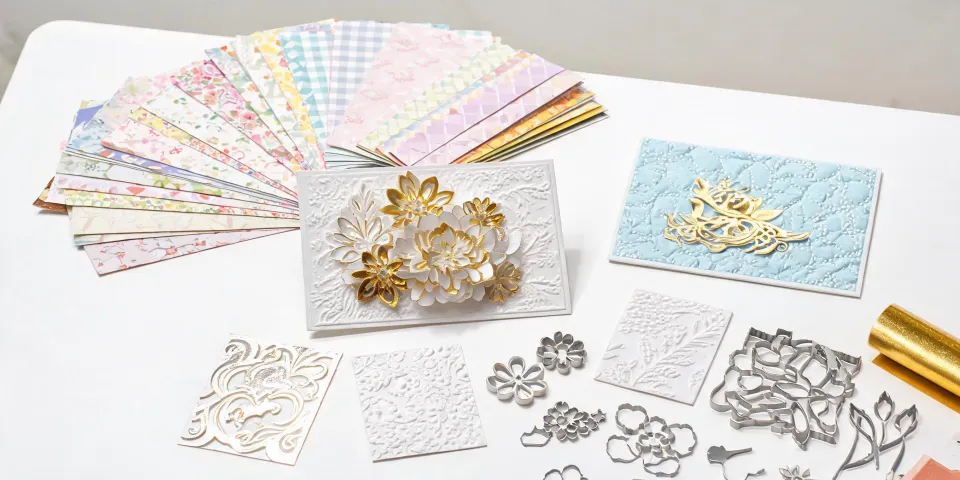
Ask 'what to make with a die cutting machine' inside a B2B buying conversation, and you will get a different answer from the one you find on a craft blog. I'm not saying the craft world is wrong. I'm saying that when a machine has to pay for its own floor space, the real question is not what can I make but what should I make, at what cost, and on what schedule. The machine itself is rarely the expensive part in the long run. The expensive part is using it for projects that do not repeat.
I've handled procurement for a mid-size company that supplies corporate greeting cards, holiday decor, and packaged paper goods. For six years, I have managed an annual supply and finishing budget of around $180,000, negotiated with printers and packaging vendors, and logged every order in a cost system that makes my team judge each project by its total cost, not its unit price. That background shapes everything I say about equipment purchases.
There is no perfect answer to the machine question, but there is a practical way to sort it: by scenario. I have seen the same machine be a profit center for one business and a hobby for another. The difference was not the tool. It was the order pattern behind it.
Scenario 1: The order comes back every year
Scenario one is the strongest case for owning a die cutting machine. It applies when the same customer, or the same type of customer, buys the same category from you annually. In our case, that category is corporate greeting cards and Christmas ornaments.
The cost model changed for me in November 2023, when we compared a vendor quote for 1,000 small paper ornaments with the cost of producing similar ornaments on our Spellbinders Platinum die cutting system. The vendor quote came in around $1.36 per ornament before shipping. Our in-house material and labor cost was around $0.42 per unit. I almost signed the purchase order before checking that our existing dies could do the job. That was the moment I understood why the decision belongs in procurement, not just in the craft room.
But that 2023 comparison only proved the math for one order. The real reason we kept the project was because the request repeats every fall. When a customer asks for December holiday pieces, we know the same design will return in some form next year. That gives us time to amortize the dies and to train a consistent operator.
The Spellbinders City Holiday collection has become our starting point for those pieces. The winter street scenes and building details die cut cleanly at the sizes we use, and they help us make a Christmas ornament that doesn't look like a generic stamped circle.
One cost that does not appear on the machine invoice is postage. A standard First-Class Mail letter costs $0.73 under USPS pricing effective January 2025, but that low rate only applies to letters below a certain thickness and rigidity. If the die cut design turns into a bulging dimensional piece, it moves into a large envelope or small parcel price, and a $0.73 project becomes a $1.50 or $4.50 project overnight. We favor flat letter-friendly pieces for this reason.
This scenario does not justify a machine if the order only happens once. If you have one large customer request and no sign of follow-up, outsource it. Annual repeat volume, even small volume, is what makes the fixed cost workable.
Scenario 2: High product mix, low volume per SKU
Scenario two is less obvious. It is not about big quantity. It is about a wide range of small orders. A craft retailer might ask for 25 versions of a greeting card, each with a different local landmark or motif. A corporate client might need forty gift tags for each of six regional sales meetings. When I compared pricing from outside finishers for these jobs, the problem was never the piece cost. It was setup charges, minimums, and lead time. An in-house machine removed those thresholds without adding a large labor cost, because the runs are small enough for one person to manage.
So what do we make in this scenario? Greeting card designs, gift certificate holders, small display cards, and packaged paper accessories. None of them are high-margin products on their own. They become profitable because the volume is split across perhaps two hundred designs in a month, and a die cutting machine lets us respond without waiting for outside scheduling.
If I remember correctly, our first trial of this model produced more scrap than products. We treated the first month as a learning curve and, in retrospect, should have planned for it. The practical help came from an unexpected place: inventory storage. Once the die collection grows, it becomes impossible to rely on memory. The Spellbinders Craft Stax storage system we bought was not a glamorous purchase, but it stopped our team from reordering dies we already owned. Duplicate die orders are pure waste and they were invisible until we audited the inventory.
Scenario 3: One-time special request, likely to stay one-time
Now for the honest limit of that advice. I don't recommend buying a machine for a standalone 'special project' even when that project looks profitable. For example, a one-time Christmas ornament with a custom company logo may seem like a nice revenue stream. If the artwork is custom, the die is an extra cost, and it will not be reused unless the client reorders. In that situation, a trade finisher or a specialized decorator is often a better financial answer.
This is also a good discipline for in-house teams. The question everyone asks in a creative kickoff is, what can we make? The better question is, will this come back and how often? If the answer is no, rent the capability.
A quick way to sort your situation
I use a short mental checklist before recommending the purchase of a machine. Is the product going to appear on next year's order form? If yes, it becomes a candidate for in-house production. Does the project need many variations at low volumes, or one standard item at high volume? Both can work, but they require different workflows. And can the variation be handled with dies already available from brands like Spellbinders, or does the design need custom tooling? Custom tooling changes the cost equation significantly.
If the project passes those three checks, owning a die cutting machine can be a good long-term decision. If it fails the checks, the better answer is to use an outside service until the volume proves itself.
There is no universal best project list. What matters is that your machine, your dies, and your order book all point in the same direction. When they do, you will probably find that die cut greeting cards and Christmas ornaments are just the first two entries on a longer list.