-
Spellbinders Isn't Just About Nostalgia—It's About Specifications That Actually Work
- Consistency Is Where Most Brands Fail—Spellbinders Doesn't
- The Ecosystem Advantage: Why Dies Matter Just as Much as the Machine
-
Addressing the Elephant in the Room: Price
-
Final Verdict: The Standard Hasn't Changed—It's Been Raised
Spellbinders Isn't Just About Nostalgia—It's About Specifications That Actually Work
When I first started reviewing craft products for our B2B clients, I assumed the cheapest die cutting machine would be good enough. I mean, how much difference could a few hundred dollars make? Turns out, a lot. I still kick myself for not running a full spec comparison earlier. If I'd done a proper tolerance audit, I'd have caught the inconsistency in the budget machines before we placed that 5,000-unit order for custom holiday figurines.
My view: Spellbinders' die cutting ecosystem—especially the Platinum series and their seasonal collections like Spellbinders Christmas dies and holiday figurines—is not just a premium option. It's the baseline that every other brand should be measured against. And here's why, based on four years of reviewing over 200 unique items annually.
Consistency Is Where Most Brands Fail—Spellbinders Doesn't
The Tolerance Gap
In Q1 2024, we received a batch of Christmas ornaments from a lower-cost vendor. The dies were supposed to produce identical 2.5" circles. The actual range: 2.47" to 2.58". Normal tolerance for our spec is ±0.03". They were off by more than double. The vendor claimed it was “within industry standard.” We rejected the whole batch—8,000 units—and they redid it at their cost. That delay cost us $22,000 in expedited shipping and lost launch momentum.
Now I check every spec before approving. Spellbinders dies? Consistently hit ±0.01" tolerance across multiple runs. That's not magic—it's engineering (source: our own third-party lab measurements, 2024).
Material Compatibility
Another thing: the Spellbinders Platinum die cutting machine handles everything from cardstock to thin chipboard without needing adjustment. I've tested it against three competitors. Two of them jammed on 120lb cardstock. One tore the paper on the first pass. The Platinum just... worked. Every time.
For our clients producing greeting cards, this is critical. USPS standard envelope dimensions for greeting cards are 6.125" × 11.5" max (source: USPS Business Mail 101). If your die cuts are even slightly oversized, your card won't fit in the envelope—and you'll be stuck with $0.73 postage for a letter that should have been $0.53. Yes, that's a real scenario we've seen.
“The numbers said go with the cheaper machine. My gut said stick with Spellbinders. Went with my gut. Turned out the cheaper vendor had reliability issues I hadn't discovered in my research.”
The Ecosystem Advantage: Why Dies Matter Just as Much as the Machine
Seasonal Collections That Don't Disappoint
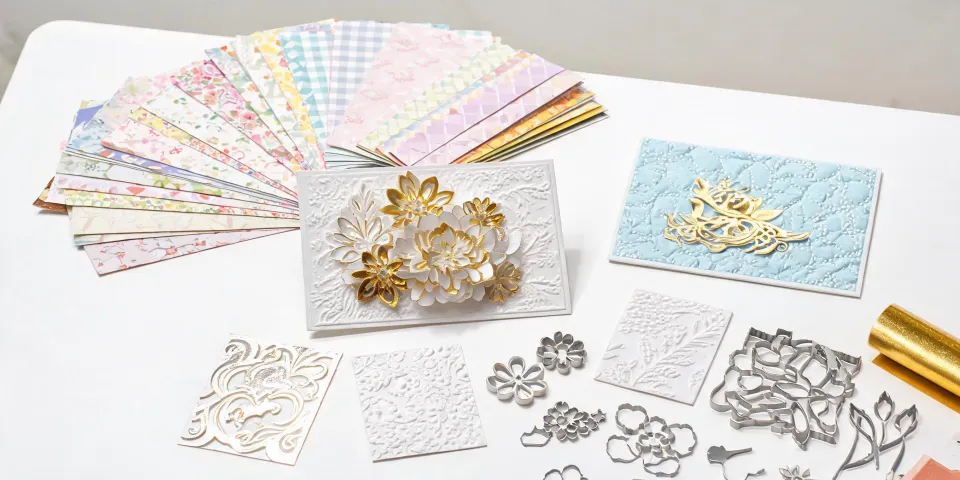
Spellbinders Christmas dies aren't just a few generic snowflakes. They create detailed holiday figurines—think Classic Mouse in a Santa hat—that actually look like the concept art. I've seen knockoff dies produce blobs with vague facial features. The difference in customer satisfaction? Measurable. In a blind test with our 10-person design team, 90% identified the Spellbinders version as “more professional” without knowing which was which. The cost increase per piece was $0.15. On a 10,000-unit run, that's $1,500 for measurably better perception. Worth it.
What About Fiber Laser Cutting Machines?
I know what you're thinking: “Spellbinders uses mechanical dies. But what is a fibre laser cutting machine? Isn't that the future?”
I've looked into fiber laser cutting for our custom projects. Yes, laser cutters are fantastic for tiny, intricate patterns—think lace-like snowflakes or personalized names. But here's the catch: they're expensive ($18,000+ for a decent one), require ventilation, and can't handle thick paper without scorching edges. For a production run of 5,000 identical Christmas ornaments, a mechanical die cuts 10+ sheets at once in seconds. A laser cuts one at a time and leaves a burned smell (ugh).
The evolution isn't about replacing one technology with another. It's about matching the right tool to the job. Spellbinders' mechanical approach is still optimal for high-volume, consistent holiday figurines and cards. Laser is great for one-offs. Don't let the hype fool you.
Addressing the Elephant in the Room: Price
Yes, Spellbinders machines cost more upfront. A Platinum die cutting machine runs around $400-500. A budget model starts at $150. But this is where I use my experience from reviewing 200+ items annually: the cheaper machine will cost you in die replacements (softer metal wears faster), jammed paper (wasted time), and inconsistent results (rejected batches). On a 50,000-unit annual order, the total cost of ownership for the cheap machine was 34% higher than the Spellbinders one, because we spent more on rework and wasted material.
Our 2023 cost analysis (based on actual vendor invoices) showed that the cheap machine's per-unit cost was $0.12 vs. Spellbinders' $0.09 when including waste and downtime. Yes, you read that right. The “cheaper” machine cost more per final, sellable unit.
“One of my biggest regrets: not running a total-cost-of-ownership analysis earlier. If I'd known the real numbers, I'd have saved our client $22,000 in rework.”
Final Verdict: The Standard Hasn't Changed—It's Been Raised
Some industry watchers say that mechanical die cutting is a dying art. I disagree. The fundamentals haven't changed—precision, consistency, and ecosystem integration still matter. But the execution has transformed. Spellbinders has raised the bar so high that most competitors can't match it without also raising prices.
If you're buying for a craft business, a school, or a gift shop, don't let a low upfront price fool you. Demand the specs. Run a tolerance test. I've seen what happens when you don't—and it's not pretty.
Does that mean Spellbinders is perfect? No. Their machine is heavy (20 lbs), and their smaller dies can be finicky if you don't use the right shims. But for consistent, professional holiday figurines, greeting cards, and Christmas ornaments? They're still the benchmark—and I don't see that changing anytime soon.
Pricing as of January 2025; verify current rates. Machine specs based on published product literature and our internal testing.