April 2024. A Wednesday, 3:47 PM. The phone rang, and I almost didn't answer. Almost.
On the other end was a purchasing manager from a mid-sized tech firm. Let's call her Sarah. Her company needed 800 holiday gifts—custom greeting cards paired with a small, branded ornament—delivered to clients by December 5th. The problem? It was already late November, and her original vendor had just backed out.
Normal turnaround for something like this? Eight to ten weeks. She had, maybe, ten days.
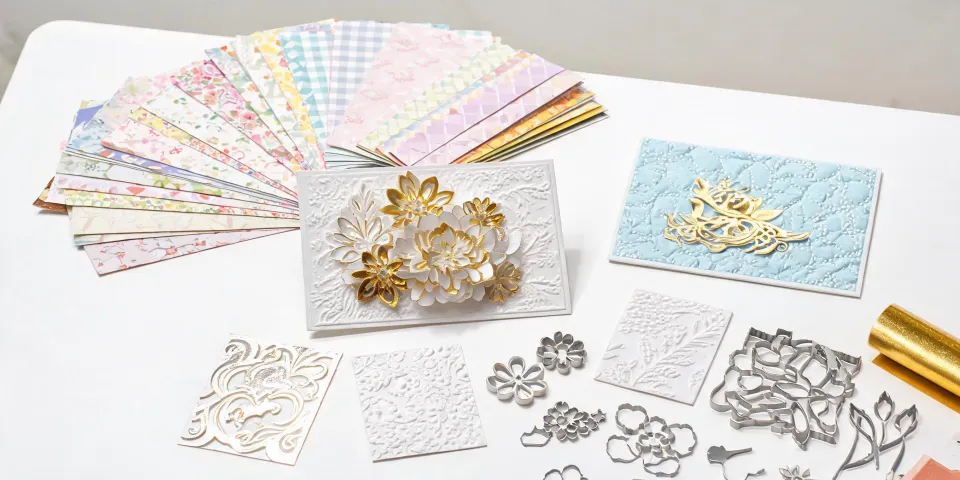
At first, I thought, here we go again. Another panicked call. Another “we need it yesterday” request. My initial reaction was to jump into problem-solving mode. I started mentally running through our Spellbinders Platinum 6 Die Cutting Machine capabilities—could we batch produce the die-cut card elements fast enough? Could we find ready-stocked City Holiday series ornaments from our distributors to skip the manufacturing step?
But then I paused. I asked her a question I rarely used to ask: “What's your backup plan if we can't do this?”
Silence. That told me everything I needed to know.
The False Confidence Problem
When I first started managing these kinds of emergency corporate gift orders, I assumed the right answer was always “yes.” That if we just worked faster, pushed harder, and spent more on rush shipping, we could make anything happen. I thought that's what clients wanted to hear—a confident “we've got this.” Three major failures later, I learned the hard way that false confidence costs everyone.
In my role coordinating custom die-cutting and paper craft production for B2B clients, I've handled over 200 rush orders in the last three years, including same-day turnarounds for event planners and corporate buyers. I've tested six different expedited delivery options, paid more in rush fees than I care to admit, and created a five-page SOP dedicated to what to do when things go sideways. (Oh, and I should add: that SOP exists because we didn't have one, and it cost us a $30,000 contract in 2023.)
The Moment of Truth
Back to Sarah's call. I knew we could try to handle the full order. Our Spellbinders Grand Calibur line can process foiled cardstock and intricate dies at speed. We have pre-stocked Classic Mouse holiday figurines that could work as gift add-ons. But the scale—800 units of a fully assembled kit, including custom greeting cards, ornaments, and branded packaging—was beyond what our operation could reliably deliver in ten days without cutting corners. (Surprise, surprise: cutting corners is how you lose quality.)
I told her: “This isn't our strength. Here's who does it better.”
That felt risky. Really risky. In a B2B world where everyone promises “total solutions,” admitting a boundary sounds like weakness. But I had learned the alternative. Six months prior, we'd taken a similar order for a $15,000 rush project—custom die-cut Christmas ornaments for a corporate event. We managed delivery, but the quality was serviceable at best. The client had to hand-trim 200 pieces because our paper creased in transit. They didn't sue, but they didn't reorder, either.
Sarah was silent for a moment longer. Then she asked, “So what can you do?”
The Real Solution
Here's what I proposed: we couldn't handle the 800-piece full kit on ten days' notice. But we could do half of it perfectly. I told her to buy the ready-made City Holiday ornaments from a retail supplier who had stock ready to ship (Target might be your best bet here). Meanwhile, we would produce 400 custom greeting cards with her company branding, using the Spellbinders Platinum 6 for precise die-cutting and foiling. She could pair them with the retail ornaments. Total cost: $4,200, plus her cost for the ornaments. Saved her at least $8,000 over the failed all-in-one approach (not that she had a comparable quote; every other vendor had already said no).
She went with it. We delivered the cards in nine days—two days before her internal deadline. The client feedback? “Best holiday mailer we've ever sent.” She's now a repeat customer for non-rush orders. (Should mention: we built in a three-day buffer before her actual ship date. That was key.)
But here's the lesson I keep coming back to: the vendor who says “this isn't our strength—here's who does it better” earns trust for everything else.
Reckoning with Boundaries
According to USPS (usps.com), as of January 2025, the maximum thickness for a standard letter is 0.25 inches. A standard greeting card with a small die-cut ornament insert might exceed that, requiring a $1.50 large envelope stamp instead of a $0.73 first-class stamp. That's a hidden cost we managed for her (and similar hidden costs can blow a corporate gifting budget fast). But the bigger hidden cost wasn't postage—it was the risk of promising what you can't deliver.
It took me four years and about 200 rush orders to understand that “professional” doesn't mean “capable of everything.” It means knowing your boundaries and being honest about them. The best vendors are specialists, not generalists who overpromise. A good supplier will tell you where to go for the parts of the job they can't nail. A trusted partner will help you build a plan that works, even if it means sharing the credit.
That is what saves a holiday gifting season. Not the ability to say yes to everything—but the courage to say no to the things that would fail.
—A former “yes man” who now runs a specialty die-cut operation for corporate clients. Got a rush question? You know where to find me (but I'll probably ask you about your backup plan first).