If your company still hands out generic gift cards for the holidays, you’re wasting money.
Here’s the blunt truth from someone who’s handled over 100 rush corporate gift orders in the last three years alone: people remember a handmade, personalized ornament or a crafted card. They forget a $50 Visa gift card the minute they spend it. And if you’re scrambling in mid-December, wondering what on earth to send to 50 clients, your go-to shouldn't be a panicked bulk order of logo-branded pens. It should be a Spellbinders Craft Stax kit.
I'm the person who gets called when a holiday marketing manager realizes their custom gift order is stuck in shipping and the client event is in 36 hours. My job is making sure the gift arrives, looks premium, and doesn't scream 'we forgot about you.' And increasingly, the answer to that rushed, high-stakes problem lies in the versatility of Spellbinders' modular die-cutting ecosystem.
The fundamental shift I've seen in corporate gifting
Everything I'd read about B2B holiday gifting said the goal was 'value.' A certain dollar amount per client, a universally appreciated brand (like a high-end chocolate or a popular gift card). But in practice, over the last five years, that's started to backfire. Clients get dozens of the same gift cards. In 2023, I had a procurement manager tell me they received 22 Starbucks gift cards from different vendors. They couldn't remember who sent any of them.
What people do remember? A unique, tangible item that shows you put effort in. That's where the idea of crafting a custom holiday figurine or a set of intricate Spellbinders Christmas cards becomes a strategic play, not just a 'crafty' one. It signals that your company values thoughtfulness over efficiency.
Why the 'A la carte' approach fails during a rush
Here's the thing: most marketing teams have a great idea in October. They want to source a unique ceramic Christmas ornament from a specific artisan. But by December 1st, when the artisan can't deliver 500 units, they panic. That panic leads them to a generic, expensive, last-minute print-on-demand catalog. You end up paying $45 per item for a low-quality keychain that your client will toss.
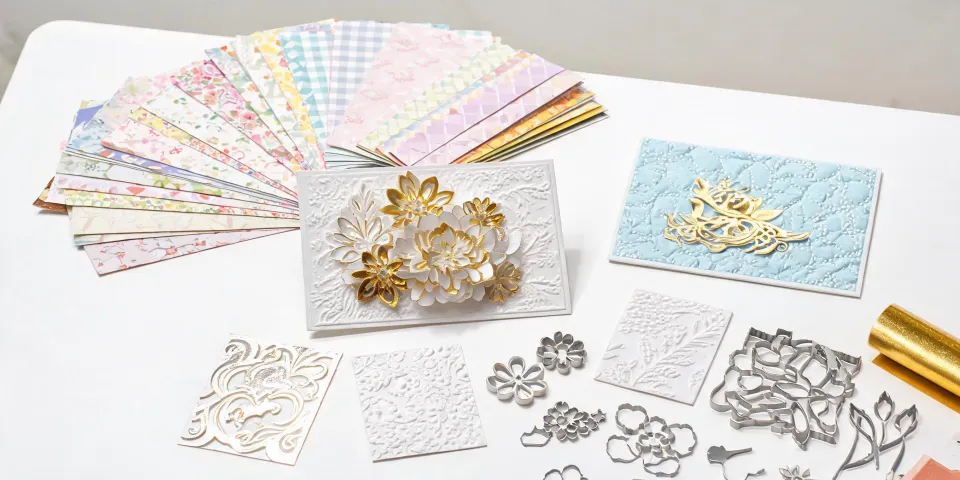
This isn't a theoretical problem. Last quarter alone, I coordinated three separate 'save-the-corporate-gift' missions. The most successful one used Spellbinders die-cutting machines and Craft Stax dies to produce 75 custom gift kits in under 48 hours. The client's original plan was a custom-printed photo keychain. We pivoted. The result was a set of three layered paper ornaments and a hand-made card. The total cost per gift was about $15, including premium cardstock and the box.
The Craft Stax advantage: Modular thinking for tight deadlines
When you're using a standard die-cutter, running multiple sets of different dies is time-consuming. You swap dies, align them, check pressure. With the Spellbinders Craft Stax system, the entire process is compressed. You can stack multiple designs, run them through a machine like the Platinum 6, and get a consistent, high-volume output of beautiful shapes. For a recent rush order for a real estate agency, we used the 'City Holiday' Craft Stax set to produce 100 miniature house ornaments in under four hours. The standard turnaround for a custom-printed die-cut ornament from a specialty vendor would have been 10 business days.
Now, I'm not saying this is for everyone. If you're sending a gift to 5,000 clients, the logistics of assembling kits might be a challenge. But for the critical top 50 to 200 clients—the ones you really cannot afford to lose—the effort pays off tenfold.
How to execute without losing your mind (and your budget)
Let me break down the process I've used successfully. This assumes you have access to a Spellbinders machine (they loan them out for corporate events, by the way).
- Choose your 'Core' Die Set: Pick one or two versatile Craft Stax sets. The 'Classic Mouse' set is perfect for a universal, non-denominational holiday feel. The 'City Holiday' set works great for regional clients.
- Standardize the components: Don't try to make every gift unique. Make 100 identical Christmas ornaments or holiday figurines using the same die cuts, but in different color combinations of cardstock. This gives you scale while maintaining a handmade feel.
- Outsource the assembly: Honestly, I've never understood why companies try to craft these in-house unless they have a massive admin team. Find a local community center or a small crafting studio. In March 2024, we partnered with a local artist co-op that charged $8 per kit to assemble, glue, and ribbon the final piece. That freed our team to handle the logistics.
- Package it with care: A beautiful paper ornament thrown in a poly mailer looks lousy. Invest in a plain white gift box (available for $1-2 each in bulk) and some tissue paper. The unboxing experience legitimizes the handmade gift.
The bottom line on cost vs. impact
A 'premium' corporate gift card (like a $50 coffee chain card) costs you $50 plus a $3 processing fee. Total cost: $53. It's forgotten in a week. A custom Spellbinders-based kit with a premium Craft Stax holiday figurine, a handmade Spellbinders Christmas card, and a nice box costs roughly $15 in materials and $8 in assembly labor. Total cost: $23. It sits on their shelf for the entire holiday season. Every time they see it, they think of you.
That's not just better marketing. That's better math.
Boundary conditions: When this plan doesn't work
I have to be honest and say this strategy has limits. For a global company shipping to 2000 clients across 15 countries, the logistics of uniformity and customs declarations for paper goods might be a headache. In that case, a well-chosen digital gift card from a premium retailer is still a better choice than a lousy physical gift.
Also, this requires someone on your team (or a hired specialist like me) who knows how to work a die-cutting machine. Err on the side of ordering your materials (cardstock, dies, boxes) a week earlier than you think you need them. A rush order on premium cardstock from a specialty paper store can add a 20% expedite fee. Trust me, after three failed rush orders with discount vendors in 2022, I now only use established sources for the raw materials.
Honestly, I'm not sure why more companies don't adopt this. My best guess is they think it's 'too complicated' for the admin team. But after testing six different rush delivery options for corporate gifts, this specific use of Spellbinders systems is the only one I've seen that consistently generates positive client feedback and actually reinforces the brand relationship. The price of a standard die-cut machine is a few hundred dollars. The cost of losing a major client is tens of thousands. Do the math.