- Spellbinders vs. Generic Gifts: Which Works Better for Bulk Corporate Orders?
-
Dimension 1: Product Consistency vs. Personalization
-
Dimension 2: Procurement & Fulfillment Process
-
Dimension 3: Support & Flexibility
-
Dimension 4: Internal Customer & Finance Satisfaction
-
So, When Should You Choose Spellbinders vs. Generic Gifts?
-
A Quick Note on Shipping & Logistics
-
Final Thoughts
Spellbinders vs. Generic Gifts: Which Works Better for Bulk Corporate Orders?
I manage all the gift ordering for a 300-person company across three locations. That means roughly 60 orders annually—from Christmas gifts to holiday figurines and greeting cards for events. When I took over this role in 2020, I learned quickly that not all suppliers are created equal when it comes to batch orders.
Honestly, I've tried everything. Generic wholesale gifts from big boxes, custom-printed items, and—after a few painful experiences—I've started leaning heavily on Spellbinders for our seasonal needs. But I don't want to make this sound easy. The choice isn't obvious, and there's real trade-offs.
The Contrast Framework: What We're Actually Comparing
Let's set the stage. We're comparing Spellbinders die-cut crafts and kits (like their Christmas cards, ornament dies, and figurine sets) against generic, ready-made gift items (think bulk trinkets, printed greeting cards, or stock holiday decorations). The question for an admin buyer isn't "Which is prettier?"—it's "Which one works better for my constraints?"
Here are the dimensions I look at:
- Product consistency across batches
- Procurement and fulfillment process
- Support and flexibility
- Internal customer satisfaction vs. finance compliance
I'll compare each dimension directly. Ready?
Dimension 1: Product Consistency vs. Personalization
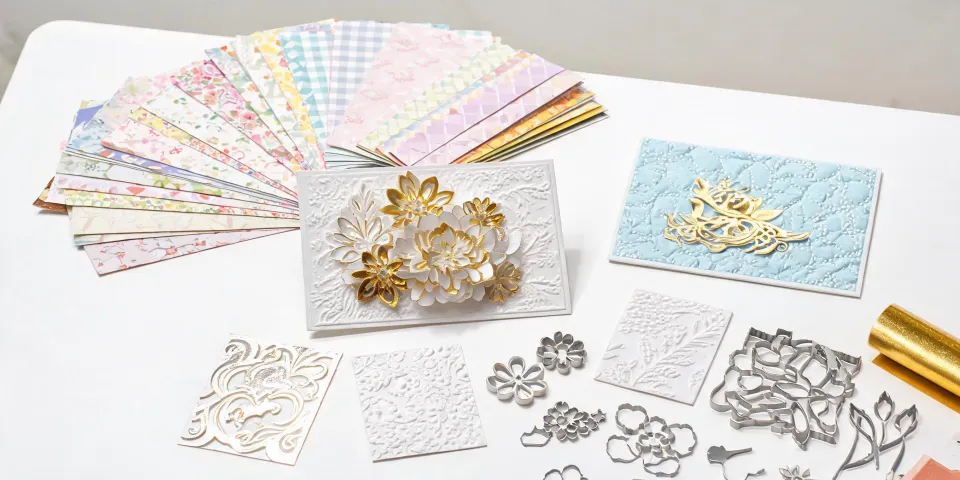
Spellbinders: Their die-cut machines and kits (like the Platinum or Scout models) produce highly consistent results. When we ordered 200 Christmas card kits last year, every card had the same cut depth, fold quality, and assembly feel. I didn't worry about batch variation. The City Holiday collection, for example, gave us a consistent theme across figurines and ornaments. That's a big deal when you're sending gifts to 200 employees—you don't want one person getting a sloppy card while another gets a perfect one.
Generic gifts: On the other hand, bulk generic items vary wildly. I once ordered 300 printed greeting cards from a discount vendor. About 40 had misaligned text, and 15 had creased edges. The vendor replaced the bad ones, but that meant extra invoicing and logistics hassle. For me, that's time I didn't budget for."
Conclusion: For consistency, Spellbinders wins—but only if you have the ability to perform the die-cutting yourself (or have a partner who can). If you just need one-and-done items, generic gifts might be simpler, but you'll pay in rework.
Honestly, I'm not sure why some vendors consistently beat their quoted timelines while others consistently miss. My best guess is it comes down to internal buffer practices at their facility. With Spellbinders, since we're typically doing the assembly ourselves (or with a craft partner), the timeline is more predictable—but not always faster.
Dimension 2: Procurement & Fulfillment Process
Spellbinders: The core advantage for me is the ordering experience. They sell through distributors and direct, and the online ordering portal is clean. I can place an order for die-cutting machines, dies, and kits in one go. Invoicing is handled digitally—no handwritten receipts like that one vendor who cost me $2,400 in rejected expenses back in 2021. For a 60-80 order annual volume, that matters a lot to accounting.
Generic gifts: This category is a mixed bag. Larger wholesale sites often have good systems, but smaller vendors—especially the ones offering "custom" gifts—sometimes lack proper invoicing capabilities. I've learned to verify this first, thanks to that $2,400 lesson.
Conclusion: If you process more than 20 orders a year, digital invoicing and predictable fulfillment processes are non-negotiable. Spellbinders, through its distributors, usually provides that. But if you're a small company (<20 employees) doing once-a-year gifts, you could get away with the less formal vendor—but check their invoicing first.
To be fair, the generic route can feel faster: one click, items arrive. But when you factor in the rework time for bad batches, it's not always quicker.
Dimension 3: Support & Flexibility
Spellbinders: Here's where the "professional but approachable" brand voice really shows. Their support team knows the product—how many dies fit in a kit, which machines handle what thickness, etc. When I called about a machine malfunction during a rush order, they helped me troubleshoot within 20 minutes. No fluff, just action.
Generic gifts: Support for bulk generic orders is often... absent. You get a website contact form or a generic email address. If the items arrive damaged or misprinted, you're left with a support ticket that takes days. For a last-minute holiday order, that's a nightmare.
Conclusion: Spellbinders' support is more responsive because they care about the brand experience. But that only matters if you're buying their branded products. If you're just buying stock items from a generic site, you're on your own.
The assumption is that generic vendors offer cheaper prices or equal support—but the reality is that you often trade support quality for cost savings.
Dimension 4: Internal Customer & Finance Satisfaction
Spellbinders: Our employees loved the Spellbinders Christmas cards and ornaments. I got emails from staff saying they looked "handcrafted" and "higher quality than store-bought." That internal satisfaction is huge—it's the "wow" factor you want for a holiday gift. Plus, the finance department was happy: proper invoices, clear CO1 line items, no surprises.
Generic gifts: People notice cheap gifts. I once ordered generic holiday mugs. Half of them ended up in the breakroom because recipients didn't like them. That's $1,200 down the drain from an internal satisfaction perspective. And finance was not pleased with the waste.
Conclusion: For employee-approved gifts, Spellbinders wins every time—but only if the batch size justifies the cost. For very large orders (500+ units), the per-unit cost of generic items might be low enough that the satisfaction trade-off is acceptable. But for 100-300 unit batches, the ROI clearly favors Spellbinders.
So, When Should You Choose Spellbinders vs. Generic Gifts?
Here's the bottom line, from someone who's made both mistakes and successes:
- Choose Spellbinders (or similar premium craft kits): When you need logo-free, high-quality gifts that feel personal. Works great for 50-300 unit holiday gifts, client gifts, or employee appreciation packs. The product consistency and support make it worth it.
- Choose generic gifts: When you're on a tight budget (<$5 per unit), need extremely low per-item cost, or don't care about brand perception. Works for cheap promotional items or massive distribution events (500+ units). But prepare for rework and lower satisfaction.
- The sweet spot for Spellbinders: Mid-range budgets ($10-25 per recipient), batch sizes of 100-500, and a desire for a memorable gift that stands out. Their City Holiday or Classic Mouse collections scale beautifully for this.
I get why people go with the cheapest option—budgets are real. But the hidden costs of rework, low satisfaction, and finance headaches often exceed the savings. At least in my experience.
A Quick Note on Shipping & Logistics
One thing I learned the hard way: timeliness. According to USPS (usps.com), as of January 2025, First-Class Mail large envelope (1 oz) costs $1.50. But if you're shipping bundles of cards or ornaments, you're likely using Priority Mail. Spellbinders' kits are designed to be flat-packed, which helps keep shipping costs down. Generic items like mugs or trinkets are heavier and more fragile—shipping costs go up.
Also, per FTC guidelines (ftc.gov), claims about "order by December 20 to receive by Christmas" must be substantiated. I now verify shipping timelines with vendors upfront, especially for crafts involving multiple components (like figurnines).
Final Thoughts
Choosing between Spellbinders and generic gifts for bulk holiday orders isn't a simple "A is better than B" decision. It depends on your size, budget, and what matters more: product consistency or per-unit cost. For my company, Spellbinders has become the go-to for our 100-300 unit Christmas gift rounds because the satisfaction payoff and process reliability outweigh the cost premium.
That said, I still use generic suppliers for small, low-value promotional items (like under $3 giveaways). They have their place. The key is knowing your own limits and not pretending one size fits all.
If you're an admin buyer evaluating both routes, my honest advice: test a small batch first. See how the product feels, see how the invoicing process works, and check if your staff or clients actually like it. That's how I arrived at my current mix.
The vendor who said "this isn't our strength—here's who does it better" earned my trust for everything else. Spellbinders has been that vendor for me on the premium side.