The Assignment Nobody Envied
It was the first week of November 2024 when my VP of operations appeared at my door with that look. You know the one. The one that says, "I have an idea, and you're going to make it work."
"We're doing something different for client gifts this year," she said. "No more generic boxed cards."
I'd been managing purchasing for a 300-person company across three locations since 2020. Every November, I ordered roughly 500 holiday cards from a corporate printing site. Two-week lead time. Standard design with our logo in the corner. They arrived, we stuffed envelopes, done.
Serviceable. Boring, but serviceable.
This year, Marketing had a "vision." And my budget had a deadline.
The Spellbinders Discovery
I started where I always do: search, compare, wonder if I should just order the boring cards again. But this time, something stopped me.
Spellbinders.
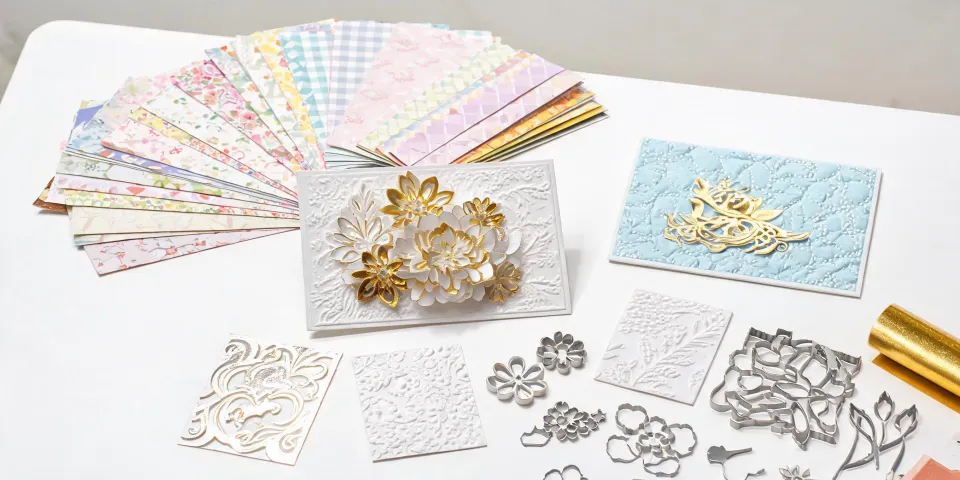
Not just die cutting machines—though the Platinum series looked genuinely impressive. It was their Christmas collections. The City Holiday dies. The Classic Mouse figures. Christmas ornaments, holiday figurines, layered card fronts that looked nothing like the flat corporate cards I'd been ordering for years.
Spellbinders crafts have this reputation in the paper crafting world. They're precise. The dies cut cleanly, the machines are consistent, and the product ecosystem actually makes sense—machines plus dies plus embossing folders all working together. For a procurement person, that's refreshing. It means fewer compatibility headaches.
Here's the thing: I'm not a crafter. I'm an admin buyer. My job is process, compliance, and making sure we don't run out of printer paper. But even I could see the potential.
The pitch was almost a no-brainer: instead of buying cards, we buy two Platinum die cutting machines, a bundle of Christmas dies, and invite employees to a craft afternoon where they assemble their own Spellbinders Christmas cards. Team building. Authentic client gifts. And a story to tell.
She said yes.
The First Disaster
Like most beginners, I made the classic rookie error: I assumed heavier cardstock meant better quality.
I ordered 110lb cardstock. It felt luxurious in the sample pack. But the first time we ran it through the Platinum 6, the folds cracked. Paper too stiff to fold cleanly. We ruined about fifteen cards in the first hour.
The Spellbinders site recommends 65lb to 80lb cardstock for most die cutting. That recommendation was right there on the product page. I skipped it because I thought I knew better.
Lesson learned the hard way: $45 of wasted stock and an afternoon of frustrated volunteers.
There was also a process problem. We didn't have a formal approval track for craft supplies. Our procurement system flagged the order as "uncategorized," finance sent me an email with thirteen question marks, and I spent two days explaining why a B2B company needed die cutting machines and storage for steel-rule dies.
Not my finest compliance moment.
Then Marketing Got Involved
Day three. Marketing manager walks past the conference room, stops, backs up, and stares through the glass at sixty half-finished cards spread across three tables.
She didn't ask what we were doing. She pulled out her phone and started filming.
"You know this is trending, right?" she said. "How to send a greeting card on TikTok. People film the card, tag the person, then mail it. We could hit this."
So a straightforward procurement project turned into a content production.
And that's when the real problems started.
The Postage Wake-Up Call
Our cards weren't flat. The layered die-cut fronts made them bulkier than a standard card. And the gift versions—cards with a small Christmas ornament or a holiday figurine attached—were definitely not going through a mail slot.
I pulled up the USPS Business Mail 101 page and did the math.
According to USPS pricing effective January 2025, a First-Class Mail letter (1 oz) costs $0.73. But a letter has to meet strict dimensions—maximum 6.125" × 11.5", maximum thickness 0.25". Anything thicker is a large envelope: $1.50 for the first ounce. And if you're sending a card with an attached ornament? That's a parcel, which means Ground Advantage rates.
USPS letter limits: maximum 6.125" × 11.5" and 0.25" thick for First-Class Mail letter rates. Above that, you're paying large envelope or parcel pricing. Source: USPS Business Mail 101.
The costs added up fast:
- Flat die-cut cards → $0.73 each (First-Class letter)
- Layered cards with thicker fronts → $1.50 each (large envelope)
- Cards with attached ornaments or figurines → $4–8 each (Ground Advantage parcel)
That reshaped the budget. And it gave Marketing a problem: their "send a greeting card on TikTok" concept assumes the card goes through the mail. Ours technically couldn't—not all of them, anyway.
So we sorted. Flat cards went to employees. Layered cards went to local clients. The ornament cards went to our top twenty accounts, carefully packed in bubble mailers.
And then the mailbox law nearly killed the whole content plan. Marketing wanted to hand-deliver a few cards to local followers "for the surprise factor." Legal shut that down fast, citing 18 U.S. Code § 1708: only USPS-authorized mail may be placed in residential mailboxes. Handing a card to a person in person? Fine. Leaving it in their mailbox? Federal violation. Nice catch, legal.
The Turnaround
Once we had the rules straight, everything actually got easier. We sorted cards into three shipping categories and built a simple workflow:
- Assembly teams cut paper using the Spellbinders Platinum machines.
- Quality check: flat, layered, or ornament tier.
- Postage tier determines envelope and mailing method.
What started as a chaotic craft project became a small assembly line. And people loved it.
The conference room stayed booked for two weeks. Employees traded dies. Someone brought in hot cocoa. The operations director—a guy who never participates in anything—made his own Christmas ornament and stayed late to help package cards on the last day.
Total output: 412 Spellbinders Christmas cards, 150 Christmas ornaments, and 50 holiday figurines. Six hundred and twelve items shipped over three weeks.
And the TikTok? The video Marketing posted—a fast-cut montage of die cutting, layering, envelope stuffing, and our mailroom clerk wrestling a cart of cards—hit 180,000 views in four days. The comments were full of people asking where the dies were from.
What I'd Tell Another Buyer
I don't have hard data on the ROI of DIY corporate cards versus ordering generic ones. What I can say anecdotally: employee engagement was worth it. The craft day brought people from different departments into the same room. Our office manager said it was the most cross-team interaction she'd seen all year.
But I also learned where to draw boundaries.
Spellbinders is a specialist. They make die cutting machines, dies, and accessories. That's their lane. They don't claim to be a full-service print shop or a marketing agency. When I emailed their support team about compatible cardstock, the response was straightforward: "We can tell you what works with our dies. For print production questions, we recommend a print specialist."
That honesty earned my trust more than any "we can do everything" pitch ever has.
Real talk: hearing a vendor say "we don't do that" is rare. But it's exactly why I'd go back to Spellbinders before I'd try a generalist supplier that claims to handle corporate gifts, custom printing, and craft workshops all in one.
If you're a B2B buyer looking at Spellbinders crafts for corporate holiday gifts, here's my checklist:
- Ask about cardstock weight before you buy. 65–80lb is the safer range.
- Plan for postage before you design the card. Embossed layers feel premium, but they change your mailing class.
- Verify current USPS rates—this was accurate as of January 2025, and prices typically change every January and July.
- Don't skip the Green Guides. If you claim a card is "eco-friendly" because it's made with recycled paper, make sure the claim checks out. Per FTC Green Guides (16 CFR Part 260), environmental claims need substantiation.
- Check with legal before you let Marketing film anything near a mailbox.
Bottom line: Spellbinders gave us better cards, genuine team engagement, and one very unexpected TikTok moment. But the real lesson was about scope. Nobody can be good at everything. The vendors who know their limits are the ones you can rely on.
And the first thing you should buy isn't the machine.
It's a paper cutter.
Trust me.