-
Bottom line first
-
Why my numbers are worth reading
-
The trigger event
-
What I actually bought from Spellbinders
-
The cost math that actually matters
-
Two details most reviews ignore
-
Mailing, not just making
-
What about the “send a greeting card via text” question?
-
The decision, including the doubt
-
When not to buy this
Bottom line first
Here’s my direct answer: If you’re buying for a business, the Spellbinders Platinum Six die-cutting machine plus a few Spellbinders Craft Stax die sets is the closest thing I’ve found to a predictable in-house greeting card and ornament operation. In 2024, my company produced 4,200 seasonal cards at an average material cost of $0.84 per card. Compare that to the $2.60 we were paying outsourced suppliers, and the machine paid for itself after roughly 300 cards. The savings are real, but only if you count the quiet costs — dies, cutting plates, test cardstock, and the time your team spends learning the sandwich.
This isn’t a “buy it because it’s fun” review. I’m a procurement manager, not a hobbyist. I buy for budgets, and I only care whether the math works.
Why my numbers are worth reading
I’m the procurement manager at a 40-person boutique gift company. I’ve managed our seasonal budget — about $120,000 annually — for six years, negotiated with 25+ vendors, and documented every order in a cost tracking system I built after getting burned on hidden fees twice. When I say $0.84 per card, it comes from actual purchase records, not manufacturer marketing.
In 2020, outsourcing every greeting card was still a sane default. By 2024, desktop die-cutting had become reliable enough to bring a huge chunk of our production in-house. The fundamentals haven’t changed — you still need clean cuts and good paper — but the execution has transformed.
In Q2 2024, when we switched to a hybrid model, I tracked every die, every sheet, every adhesive strip, and every replacement cutting plate. That’s the data behind the conclusion.
The trigger event
The vendor failure in March 2023 changed how I think about backup planning. A shipment of 2,000 pre-made holiday cards arrived with the foil-stamped front facing the wrong way. One critical deadline missed, and suddenly redundancy didn’t seem like overkill. We had to issue a rush reorder at a 40% premium. That’s what pushed me to look seriously at die-cutting.
I assumed a die-cutting machine would be another expensive idle machine that collects dust. Didn’t verify. Turned out the one-time setup cost plus dies was less than the rush reorder fee we paid in 2023. Learned never to assume the quote represents the final product after we received a batch that looked nothing like what we approved.
What I actually bought from Spellbinders
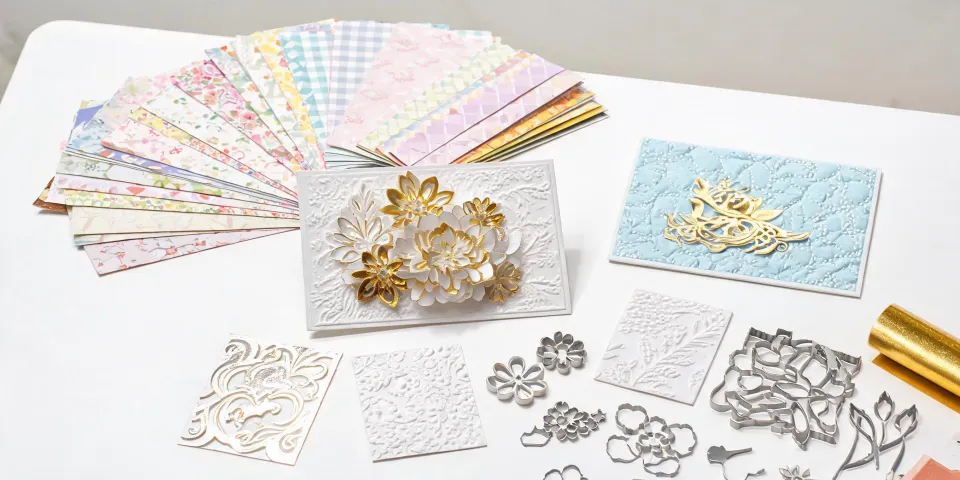
The Platinum Six isn’t magic. It’s basically a six-inch platform system that takes the standard die-cutting sandwich (plate, die, cardstock, plate). What makes it procurement-friendly is the ecosystem. The dies, embossing folders, and storage all fit together. The Spellbinders Craft Stax line is the part I didn’t expect to like. Each die set ships in labeled storage, so when your intern does inventory, they can actually find the “Classic Mouse” ornament set without opening fourteen boxes.
On the product side, the Christmas ornament and holiday figurine collections are the easiest upsells for B2B clients. We started with the holiday figurine sets because they’re small, tactile, and photograph well for corporate gift guides. The City Holiday line also does well with clients who want something architectural rather than cute. Last year, we made 600 figurines in three designs and sold out before Thanksgiving.
The cost math that actually matters
As of January 2025, street pricing for the Platinum Six is roughly $200 to $260. Die sets in the Craft Stax line start around $35 to $55. Add paper, envelopes, and adhesive, and the first 100 cards might run $1.80 each. That scared me at first. But after 300 cards, the machine cost is nearly zero, and the per-card material cost drops to about $0.80–$0.90, depending on design complexity.
For context, our outsourced cards averaged $2.60 each when we ordered 500 or more. That’s a difference of about $1.75 per card. At 4,200 cards, the annual savings came to roughly $7,350. The machine plus a few die sets paid for itself in Q4 2024.
The hidden costs are the ones nobody quotes up front. Shipping for dies. Replacement cutting plates. Test cardstock for die setup. And the big one: waste. I’d budget 10% extra cardstock for test cuts until your team has the sandwich right. One of my favorite supplier quotes included a “free setup” — which actually cost us $450 more in hidden rework because their fold registration was off. With in-house die cutting, the process is yours, and so is the blame. That’s honestly better.
Two details most reviews ignore
First, color consistency. If your brand has a specific red or green for the holidays, match it to a Pantone reference. Our brand red is matched to Pantone 186 C, and we require our printer to stay within Delta E < 2. In plain language, that’s a barely perceptible difference. The industry standard tolerance for brand-critical colors is Delta E < 2 (Reference: Pantone Color Matching System guidelines). Skip that step and your Christmas cards won’t match your website.
Second, paper weight. We use 100 lb cover (270 gsm) for card bases. That’s standard business-card weight. Lighter paper feels cheap. Heavier paper can jam the machine if you’re using the wrong plates. Know your gsm before you buy dies.
Mailing, not just making
Don’t forget postage. USPS rates effective July 2024: a Forever stamp is 73 cents and a postcard stamp is 56 cents. For flat holiday cards, the stamp is often more than the card stock itself. That doesn’t undermine the in-house savings, but it should be in your budget before you promise a CFO a 35% cost reduction on the full greeting card program.
What about the “send a greeting card via text” question?
One question that keeps showing up in searches is “how do i send a greeting card via text?” Honestly, the answer is easy: use a service like Punchbowl or Paperless Post, or attach a photo to a standard SMS. That is a completely different product than a die-cut card. If your B2B clients are asking about texting greeting cards, they probably don’t want a physical item in that moment.
But here’s the thing I tell clients: a text card dies on a screen. A physical holiday figurine or a handmade card sits on a desk for weeks. Our repeat order rate from corporate clients suggests the physical version still earns its place.
The decision, including the doubt
Had two weeks to decide before our holiday catalog deadline. Normally I’d run a full cost model over 90 days, but there was no time. I went with the Platinum Six because Spellbinders has been around for a long time and our rep answered the phone on the second try. In hindsight, I should have ordered a second die set at the same time to save shipping. But with the CEO waiting, I did the best I could with available information.
Even after approving the purchase, I kept second-guessing. What if it became another glorified paperweight? The two weeks until the first production run were stressful. I didn’t relax until we cut 200 perfect card bases in one afternoon.
When not to buy this
Now the boundary conditions. If you only need 100 cards a year, or if nobody on your team is willing to learn plate settings, then keep outsourcing. The machine will not save you money at that volume. If your designs require foil stamping or complicated multi-layer production, you may still need a commercial printer. The Platinum Six is a workhorse, but it’s not a replacement for a print shop.
So, bottom line: Spellbinders is not the cheapest way to get a greeting card. It’s the option that gives you control, consistency, and a product your client can hold. If you calculate total cost the way we do, it’s a defensible procurement decision. If you don’t, it’s easy to see it as an unnecessary expense.